| Inside GM’s AI pitch to consumers. |
Presented By |  |
It’s Thursday. Rao’s is going all in on mortality in its latest ad campaign, led by a short film titled “Limited Time Only.” The concept centers on the finite number of meals you have left to share with loved ones, if you need something to make you feel existential today. In today’s edition: —Jordyn Grzelewski, Kristina Monllos |
|
AI ‘Every step of the way’ 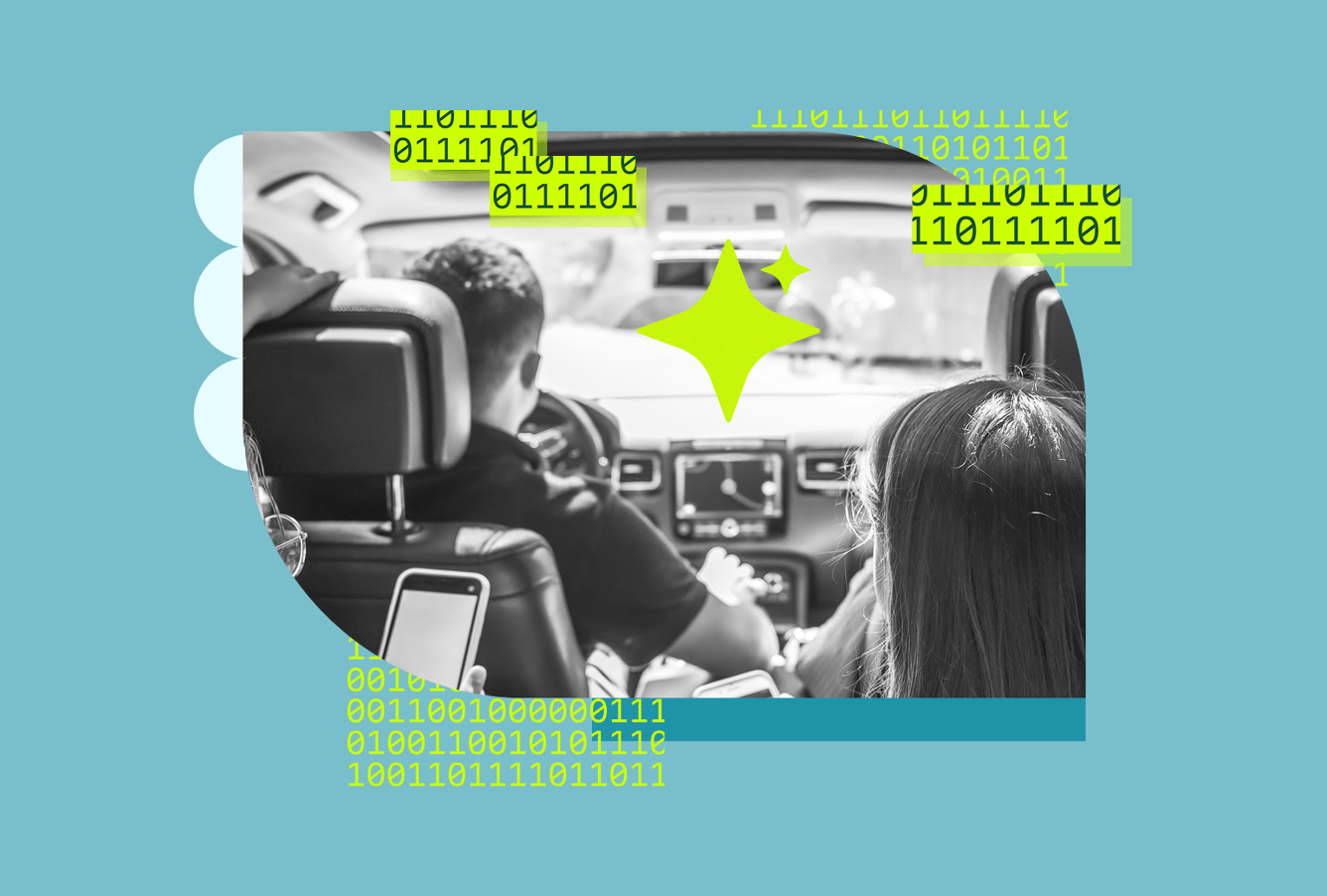 Morning Brew Inc, Photo: Adobe Stock | Working parents don’t have enough time for hobbies, a social life, or exercise, because, well, they’re busy juggling project deadlines, dinner prep, kids’ extracurriculars, and approximately 1 million other balls. Tech companies have noted this and marketed AI tools accordingly, promising to give harried parents the most precious commodity: more time. This was one of the themes of GM’s second annual tech showcase in New York in October, where execs sketched a vision for the future of transportation in which people use their cars as spaces to catch up on work, talk to their kids, and relax while the vehicle handles the drive and a host of other tasks, aided by a personalized AI assistant. “Our customers are counting on us,” CEO Mary Barra said. “Right now, somewhere across the country, a father is starting his day. He’s in one of our vehicles, and he depends on us to drop his daughter at kindergarten, to run errands, to get to work. We’re with him every step of the way. And we’ll be there when that car actually drives itself through that morning routine.” GM’s pitch went beyond the example of busy parents with the promise to bring AI-enabled conveniences to the masses. These technologies will roll out on luxury models like the Cadillac Escalade IQ and Lyriq, but will soon expand across GM’s best-selling trucks and SUVs. “The busy working parent is especially relatable because families are an important part of the customers GM serves, and our vehicles are often central to the daily routines that keep families moving,” Michael Wahlstrom, executive director of vehicle product management at GM, told us via email. “But the opportunity extends beyond parents.” For more on GM’s pitch to consumers and how it factors into its broader subscription marketing strategy, continue reading here.—JG |
|
|
Sponsored By Pinterest Business 40% of Gen Z say they wish social media had never been invented* 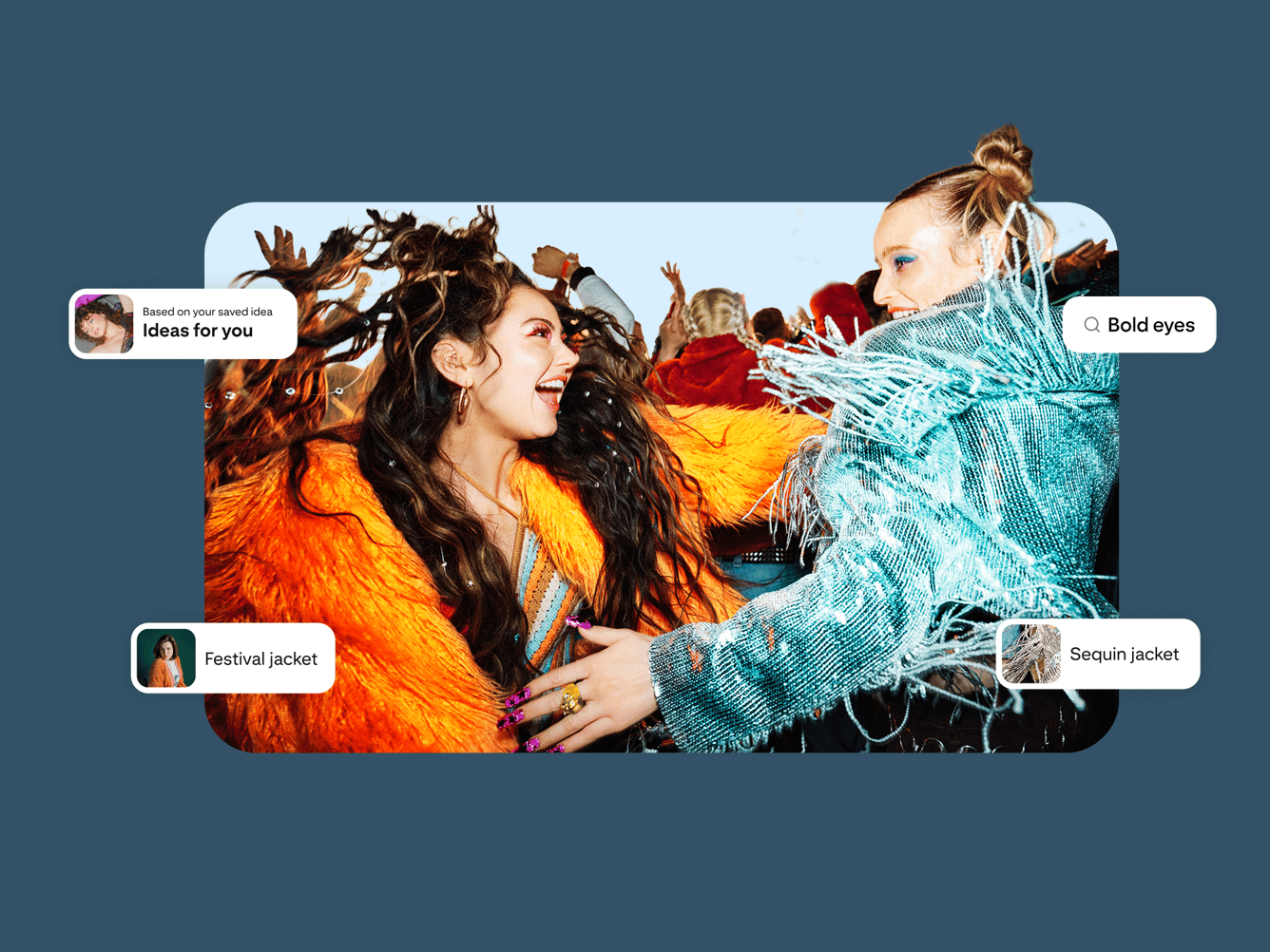 | Even the generation that grew up online is looking for ways to spend less time passively scrolling and more time living IRL. In fact, 63% of Gen Z adults now intentionally unplug.** Pinterest’s latest research shows that people increasingly want their time online to serve their lives offline. As audiences look to move from scrolling to doing, brands need to shift from simply capturing attention to creating real value. The opportunity lies in designing the exit: showing up in intentional moments with ideas that help people plan, discover, decide, and get back to the business of living. Get the playbook to help your marketing move people from inspiration to action. |
|
|
BRAND STRATEGY Maybe, baby  Maybelline | Few taglines are iconic. When one is part of the cultural lexicon, it’s hard to imagine a good reason to drop it. That could be why, instead of an outright overhaul, Maybelline is today opting to update the brand’s 35-year-old tagline, “Maybe she’s born with it. Maybe it’s Maybelline.” The update includes mostly grammatical and pronoun tweaks to the 1991 version; it now reads: “Maybe. We’re born with it. Maybe. It’s Maybelline.” Why change it at all? Sandrine Jolly, global brand president, Maybelline, acknowledged that the brand’s tagline is “a very strong asset as a heritage brand.” With that said, there is an “ambiguity” inherent in it, Jolly said, making it unclear whether the customer’s beauty could be their own, or if it’s due to Maybelline’s products. The adjusted tagline is “still about self-confidence,” she said, but is aimed at focusing on “optimism and our capacity to help women to open the doors of endless possibilities.” By changing the tagline to include “we’re born with it” and making it a separate statement, the company is looking to make clear that beauty is attributed to the person—as well as to reflect how the cultural conversation around makeup has changed. - According to YouGov data, the most common reason American women wear makeup is for a “confidence boost” (49%), with 26% citing “self-expression,” and just 13% saying they wear makeup because of “societal expectation.”
Updating the pronoun from “she” to “we” is a change aimed at broadening the brand’s customer base. The new tagline will allow the brand to “talk to every woman in the world, not only to one model of femininity, not only to one woman,” Jolly said. “We are addressing all people who love makeup.” For more on the thinking behind the grammatical tweaks and how it’s aimed at targeting a new generation of consumers, continue reading here.—KM |
|
|
MARKETING BREW WEEKLY Staying the course 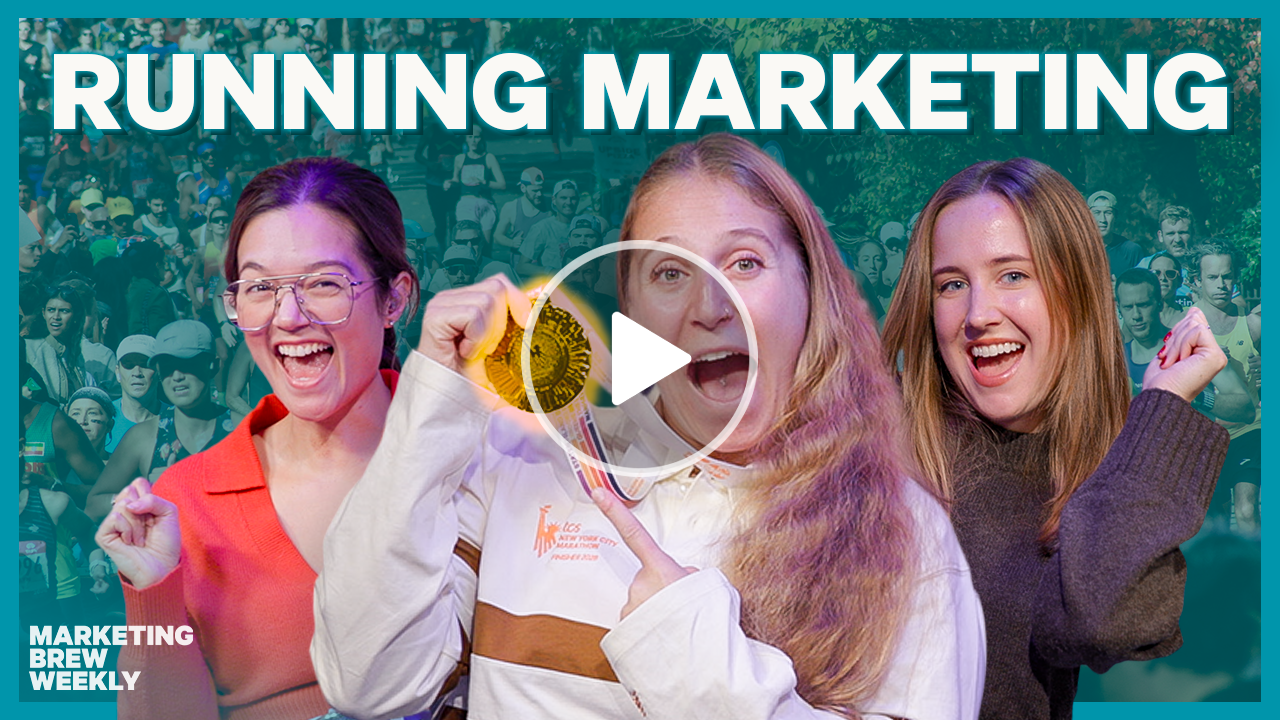 Morning Brew Inc. | New York City Marathon marketing is a brand sport now, and the finish line is only one stop on the course. On this episode of Marketing Brew Weekly, Katie Hicks and Jennimai Nguyen are joined by Alyssa Meyers, who just ran the 2026 NYC Marathon, to break down how brands like Maybelline and Nike are tapping into the running boom. They cover running influencer marketing, branded run clubs, expo sponsorships, and what happens when a marathon activation misses, like Nike’s controversial Boston billboard. Some of our takeaways: - Running is a participation sport, so play the long game. Training starts months before race day (Alyssa began in early July), which gives brands a long runway to show up in a creator’s story.
- Authenticity isn’t optional when the audience uses your product. Runners won’t try anything new close to race day, so brands that get in early with creators—and let those creators lead—build trust with their audience.
- Experiences beat billboards. Mastercard’s Priceless Start and Nike’s expanded finisher list in the New York Times show how brands stand out by giving runners something that matters to them.
- Run clubs are the low-effort way in. A good host and a light brand touch help, and brands that aren’t official sponsors (like Celsius, with shakeout runs) can still tap into marathon season.
To hear more from our conversation, including how brands might avoid missteps, listen to the full episode of Marketing Brew Weekly here. |
|
|
Sponsored By Tremendous  | Still managing incentives in spreadsheets? Manual processes could be holding your incentive programs back. Find out how to streamline operations, put incentives to work across the funnel, and measure their impact on pipeline with this guide from Tremendous. Get your copy. |
|
|
french press  | There are a lot of bad marketing tips out there. These aren’t those. Inspo board: Ideas for last-minute Black Friday campaign planning. Level set: An update on AEO benchmarking. New tools in the toolbox: A rundown of what TikTok added to its AI video tool kit. Bring inspiration to life: People want more online experiences that lead to real-world action. Pinterest’s latest blog post shares how your brand can design the exit to fuel people’s lives with ideas they can act on.* *A message from our sponsor. |
|
|
Jobs  | Real jobs shared through real communities. CollabWORK brings opportunities directly to Marketing Brew readers—no mass postings, no clutter, just roles worth seeing. Click here to view the full job board. |
|
|
WISH WE WROTE THIS  | Stories we’re jealous of. - Bloomberg wrote about how unfounded concerns about seed oils are influencing snack-food brands.
- The Wall Street Journal wrote about how some small startups are replacing their CMOs with AI.
- The Atlantic wrote about the increasing demand for public-transit-themed merchandise.
|
|
|
Share the Brew

Share the Brew, watch your referral count climb, and unlock brag-worthy swag. Your friends get smarter. You get rewarded. Win-win.
Your referral count: 0
Click to Share
Or copy & paste your referral link to others:
marketingbrew.com/r/?kid=4a79007d
|
|
|
✢ A Note From Pinterest Business * The Harris Poll, 2024, “What Gen Z thinks about its social media and smartphone usage,” survey conducted August 8, 2024 to August 15, 2024, Gen Z adults (age 18-27) n=1006. Forty percent of respondents agreed (11% strongly) with the statement that they wish social media had never been invented. ** Talker Research, US, January 2026. n = 2000. |
|
|
|
|