|
A career journalist covering spies and national security was hit with a $1 million defamation lawsuit. He turned to Substack Defender for help—and won
We spoke to SpyTalk's Jeff Stein in the days after his lawsuit was dismissed with prejudice in federal court
| ||||||||||||


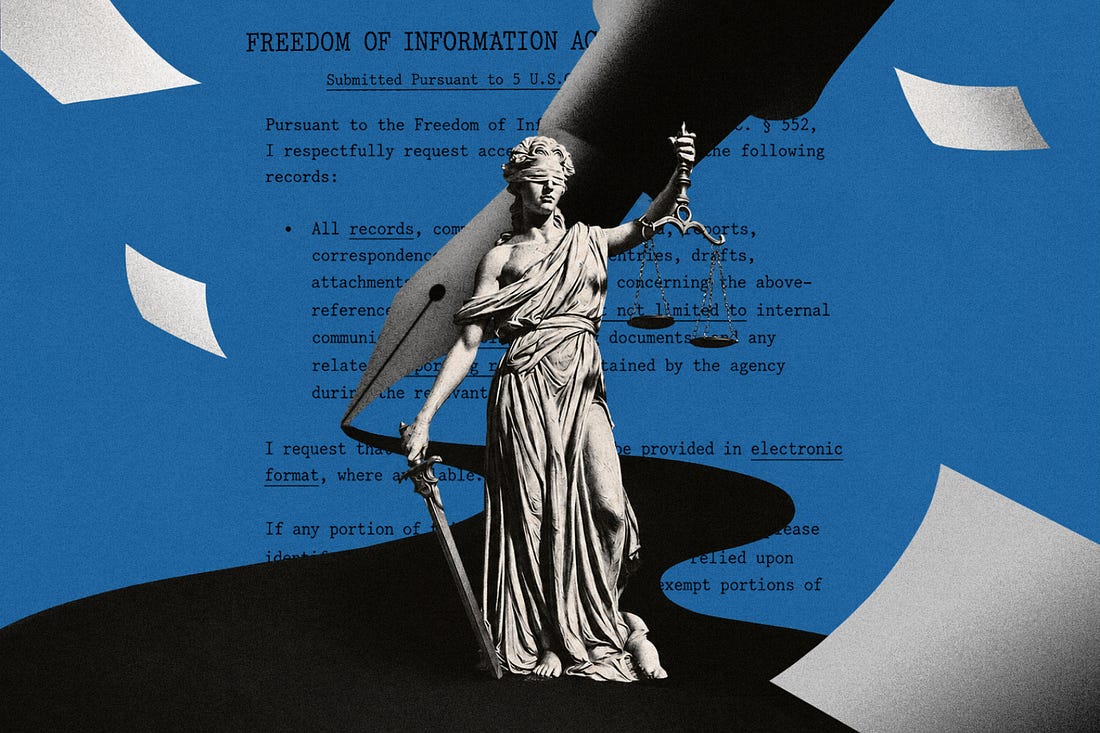 |
Earlier this year, veteran national security reporter Jeff Stein was served with an eye-watering $1 million defamation lawsuit after publishing a scoop about an incoming Trump administration official in his publication, SpyTalk. Backed by a number of authoritative sources, Jeff had reported that Keith Bass, the Pentagon’s incoming top health official, had been “effectively fired” from his previous role at the CIA for “poor management”. He turned to Substack Defender, which offers Substack publishers legal support as part of efforts to uphold a free press and free speech, to fight the case. With Defender’s support, the case was dismissed with prejudice last week in federal court.
SpyTalk has been on Substack since 2020, when Jeff brought his longtime column, previously at Newsweek and the Washington Post, to the platform and expanded it into a ring of seasoned reporters and experts breaking news and offering analysis on the world of clandestine operations. He also knows that world from the inside: before becoming a journalist, he served as a U.S. Army intelligence case officer in Vietnam. We spoke with him about threats to journalism, his experience with the lawsuit, and what it’s like to cover power and secrecy over a decades-long career.
You’ve written that legal threats like this are mostly nuisance suits but they still “suck up your time, your mind space, and your sleep.” What was it like to be served?
Well, at first it was a bit of a shock that I was being sued by this guy, and then as I read through the summons, I just scoffed, and I thought, this guy doesn’t have a case whatsoever. I was very confident about my facts, this piece had been thoroughly researched by myself, and my sources were authoritative. I couldn’t understand why he filed the suit, really.
[Without Defender] I would have had to go out searching on my own for somebody who might take on the case pro bono. The initial cost of just responding is really expensive. I’m not going to name how much [the lawyers] billed Substack, but it was in the tens of thousands of dollars just for these motions. We made a motion, they responded, we made another motion, then we had to go to court—and this is the baby steps of the legal dispute, right, just the initial steps, so you can imagine how much [a long-term case] costs. I look at my assets, which are pretty typical for a journalist, which is not a lot. My main asset being my house, I would have to sell it and, I don’t know, move into a one-room apartment? Something like that. These are the things that make you toss and turn at night.
Was this your first time getting help from the Defender program?
Three or four years ago I had a story that I thought might generate a defamation suit, so I wanted to run some paragraphs by the Defender lawyers, and they were great. They very quickly reviewed the copy and made a suggestion or two of rewording, which I did.
What happened this time around, when you applied for legal support for the Bass lawsuit?
I was very confident about it, because it was a clear First Amendment case—the guy was trying to shut down a journalist for reporting the truth. I wrote to the generic address for the Defender program, and I got a response within two days. I got a call, and they said: we think this is a case that we can get behind, so we’re reaching out to a law firm in Virginia and they’ll take on your case pro bono. That was all music to my ears. Then those lawyers, who turned out to be two terrific women, really brilliant lawyers in Arlington, in a firm right across the river from me in Washington, reached out to me, and we got on the phone and talked. They were terrific from the beginning—they said all the right things a lawyer should say. They said, calm down, don’t worry, we’ve got it, we don’t think there’s much merit to this suit, and with your permission we will go to court and fight for you. And off we went.
Did you work closely with the attorneys as they went to court?
I’m the client, so they have to discuss every move they make with me. They wrote, “Here’s the draft of our response to the summons,” for example—a 20-page, very erudite, tightly argued [filing], asking the court to dismiss the case because there was no real basis for it, either by the facts of the piece or by existing law, and that it should qualify as one of the so-called SLAPP cases—which stands for “strategic [lawsuit] against public participation,” but I like to say “silly litigation against reporters.” Anyway, it was great, the lawyers were great, and we won. Happy ending.
How have you built SpyTalk into a multi-channel news operation, with several top reporters and experts writing alongside you?
I first started SpyTalk as a column when I was at Congressional Quarterly, almost 20 years ago. It began as a weekly column, then became a daily column, and, as the title suggests, I covered national security topics with particular interest in intelligence operations—operations at the CIA, NSA, FBI, relevant departments of the Justice Department, etc. After I left CQ, I went to the Washington Post and did SpyTalk there for a couple years, and then I went to Newsweek for six, seven years, and then that was another corporate restructuring and a bunch of us were laid off. So I was really open to any possibilities. I wasn’t ready to hang up my spurs yet.
I freelanced a little for a while, and then I noticed a friend of mine who’s a China specialist, Bill Bishop, had moved from Slate to this thing called Substack, so I called him up and said, “What’s that all about?” He said it’s great, he said he wasn’t getting any satisfaction from Slate, and he knew these guys at Substack and they invited him over. He said, “I do what I’ve always done, but I have a direct relationship with readers, and I’m making more money than Slate could ever pay me. I’m making six figures, and I’ve only done it for six months. I said, “Fabulous. I said, “Do you think they’d be interested in SpyTalk?” and he said, “Of course they would.”
I got to talking about this with a bunch of longtime journalist friends who are very accomplished, from the Washington Post, wire services, Newsweek, Time magazine, and so on. So we decided to sort of do SpyTalk as a group, and we got it off the ground. We published our first story on August 31st, 2020. It’s six years ago this month, and we’re having a big party in September to mark the anniversary, at a local pub in D.C. It’s been terrific, and we had really stellar contributors right from the beginning, people who had held senior editorial positions at other legacy media publications who were, like me, sort of long in the tooth but not ready to hang it up. The burden would be particularly on me, but right from the beginning I had these other contributors who’ve changed over time but are still important cogs in the SpyTalk machinery. We launched a podcast about two years in as well, and that’s going well too.
Congratulations on six years! What do you consider your breakthrough stories?
One of the writers who came on in recent years is Michael Isikoff, very well-known investigative reporter, formerly Washington Post, Newsweek, NBC News, etc. He came with a following, but he’s a scoop artist, so when he has a scoop, we get a lot [of engagement]—I mean, we’re not reinventing the wheel here. Scoops draw readers for sure, but readers also like thoughtful pieces. We do a fair amount of book reviewing, books that deal with espionage, the spy world, and even movies and TV, and that draws subscribers in. I find that, generally speaking, you get lots of responses to scoops, but I really think it’s the thoughtful stuff that generates subscribers who stick with us. I think they’re looking for serious journalism, and we get high marks for taking on serious topics, bringing a fresh eye to ongoing scandals and crises, like the Iran war, for example.
Legacy outlets often have institutional caution baked in—lawyers reviewing copy, editors weighing the risks of publishing something. I’m curious how it feels to work without that support and if it’s changed what you’re willing to publish now that you’re working independently?
I’m the quote-unquote “boss,” but I’m really just the ringmaster of the circus. We’re all deeply experienced—I’ve been covering this stuff for 40-plus years, and others on the team have been covering it for 20-plus or more, like me, 40 years or more. So we know how we should say things carefully, we know what the rules of the road are in terms of our coverage. The suit against me by this Trump administration official, former head of the CIA’s medical office, was generated because I used “fired” in a headline and “effectively fired” in the lede, and he took great umbrage. But I have multiple sources telling me he was forced out of the CIA, as I reported in my piece, so there was no doubt about the accuracy of it. I’ve only been threatened with one suit since I started SpyTalk on Substack, only once, and that was just a letter from a lawyer saying we see grounds for pursuing you, and that was in regard to Tulsi Gabbard and the cult she’s been tied up with in Hawaii. The cult group, their lawyers, wrote me a stiff letter, and I said, “Point out the areas where I’ve gotten anything wrong and I’ll deal with it.” I never heard from them again. I can’t remember any other time in my 40-year career that I’ve been even threatened with a libel suit.
What would be different if you were still working at a place like the Washington Post?
I’d have to send my shirts and jackets to the dry cleaner. I had to have better clothes, pants, good shoes. A tie has gone the way of the dinosaur, generally speaking.
How has SpyTalk grown over the years?
It’s been growing year after year since we launched. It was kind of a shock, actually, when we put out the first story, and within a couple days there were like a thousand subscribers, and I thought, people are paying for this, now I’ve got to do another story, and another, and another, forever. I’ve got to keep it going. A lot of that was because I had developed a following in my niche-within-a-niche over the years, plus my other collaborators had followers too. We’ve grown, I would say, on average, 5% to 10% every year.
And you can pay your contributors at a rate that rivals the New York Times op-ed rate!
I used to write op-eds for the New York Times and book reviews, and I was paid anywhere from, I think, $600 to $750, something like that. Freelance rates, as you may know, have collapsed over the last 20 years. The last slick magazine piece I did was for GQ magazine in 2000, I got paid $20,000 for it, and those [outlets] just aren’t paying like that anymore, thanks to the internet, and thanks in particular to Huffington Post, which invited people to write for free—horrible idea. I dip into discussions every once in a while where people say, “I’ve been writing for six months and I’ve only got 30 followers” or whatever. Well, it depends what you’re writing, people do respond to quality and timeliness and insight. That’s been gratifying to discover, that people want quality journalism, so I think if you produce that, you’ve got a good chance to thrive on Substack.
Interview was edited for length and clarity.
The Substack Defender program offers access to legal support as part of our efforts to uphold a free press and free speech, which we believe are fundamental to a trustworthy media system. The program provides crucial legal protection for Substack publishers against certain types of claims, including access to advice and financial support for publishers who face legal uncertainty or pressure because of their work.
Thanks for subscribing to On Substack. This post is public, so feel free to share it.
| |||||||
| |||||||