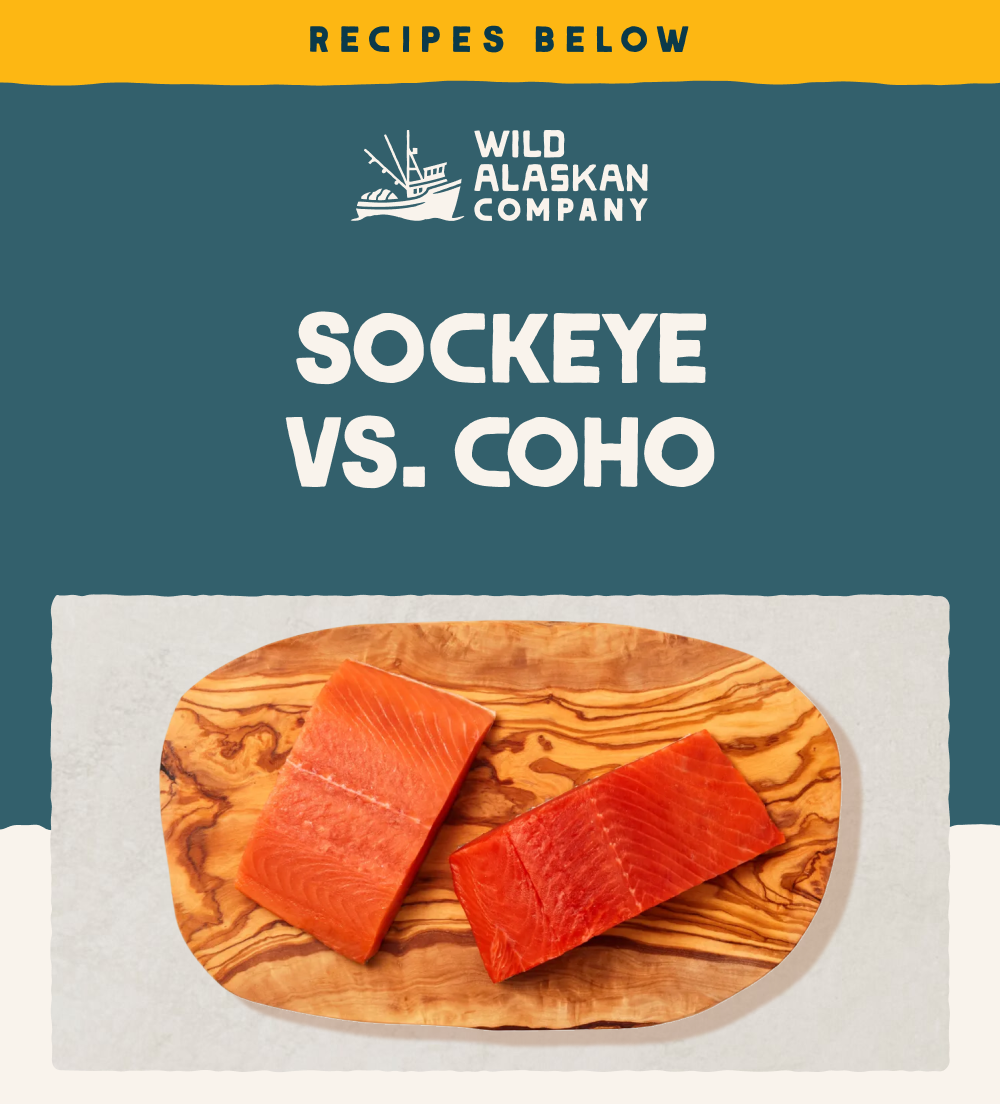
Sockeye and coho are both wild salmon species that you’ve come to know through your WAC membership. Have you ever wondered what the actual differences are between the two?
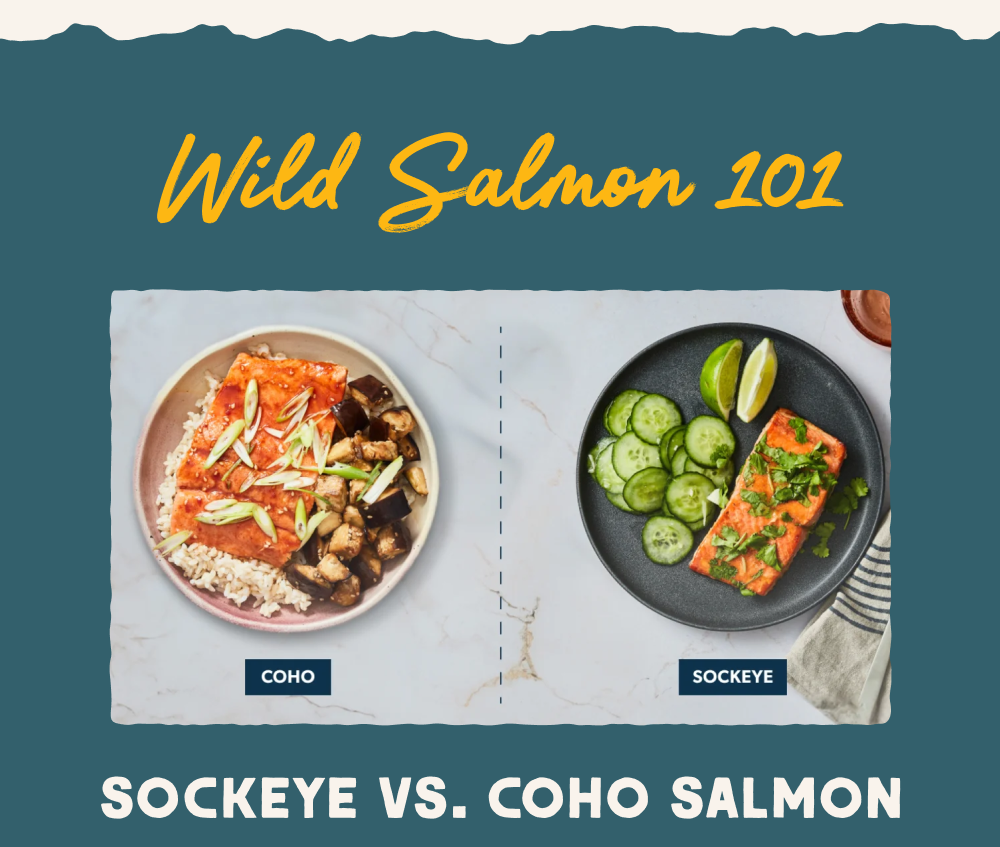
These two wild varieties share some commonalities, but if you've ever wondered which one to choose for a particular recipe (or why they look so different in the first place), here are three of the biggest distinctions:
Color: Sockeye's signature deep red color comes from a diet rich in zooplankton containing astaxanthin, while coho's lighter hue reflects a different place on the marine food chain.
Flavor: Coho has a milder, more delicate flavor, while sockeye delivers the rich, distinctive taste many people immediately associate with wild salmon. Both are incredibly versatile — you may simply find yourself reaching for one over the other depending on the meal.
Fat Content: Coho is slightly leaner than sockeye, while both are naturally sources of marine omega-3s like DHA and EPA. That difference in fat content can influence everything from texture to your preferred cooking method.
Want to dive a little deeper? We break down the science, flavor, nutrition, and best cooking applications — and more.