The head of Stanford Medicine on what’s next ‌ ‌ ‌ ‌ ‌ ‌ ‌ ‌ ‌ ‌ ‌ ‌ ‌ ‌ ‌ ‌ ‌ ‌ ‌ ‌ ‌ ‌ ‌ ‌ ‌ ‌ ‌ ‌ ‌ ‌ ‌ ‌ ‌ ‌ ‌ ‌ ‌ ‌ ‌ ‌ ‌ ‌ ‌ ‌ ‌ ‌ ‌ ‌ ‌ ‌ ‌ ‌ ‌ ‌ ‌ ‌ ‌ ‌ ‌ ‌ ‌ ‌ ‌ ‌ ‌ ‌ ‌ ‌ ‌ ‌ ‌ ‌ ‌ ‌ ‌ ‌ ‌ ‌ ‌ ‌ ‌ ‌ ‌ ‌ ‌ ‌ ‌ ‌ ‌ ‌ ‌ ‌ ‌ ‌ ‌ ‌ ‌ ‌ ‌ ‌ ‌ ‌ ‌ ‌

What the genetics revolution can teach the next one

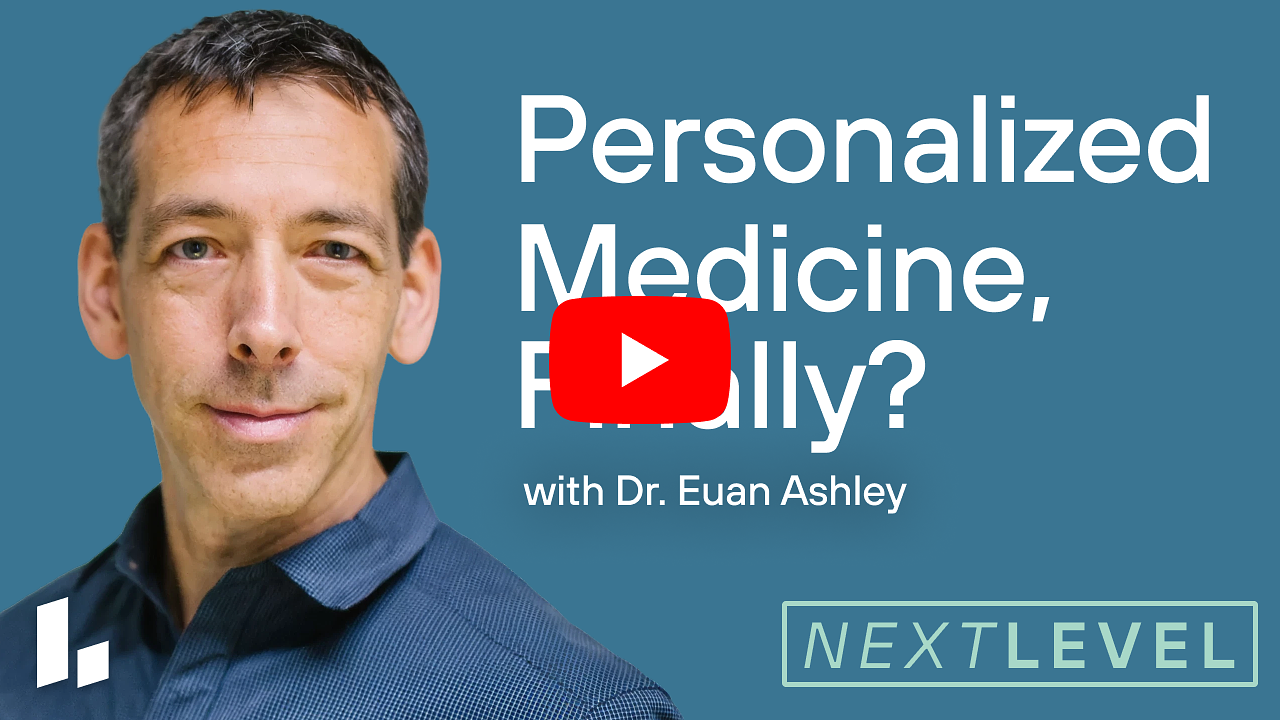
Healthcare has already lived through one data revolution: genomics. Sequencing a genome went from a billion-dollar, years-long undertaking to a few hundred dollars and a few hours. But getting the data wasn’t the hard part for long. Making sense of it was. Dr. Euan Ashley, who chairs Stanford's Department of Medicine and led the team that performed the first clinical interpretation of a human genome back in 2009, has spent fifteen years living that gap firsthand. As healthcare heads into its next data revolution—wearables, continuous monitoring, AI interpretation—his experience with the last one is a useful preview of what's about to repeat, and what won't. 

See what's next →

Five Key Takeaways

1. AI reproduced a year of research work in about thirty minutes.

Ashley ran his own genome, sequenced back in 2009, through Claude with a short prompt. It matched work that had once taken his team months for about five dollars in computing cost.

2. That speed is built on decades of infrastructure.

The AI relied on databases, tools, and reference standards the genomics community spent years building by hand, an effort that is now scaling with these tools. 

3. Medicine is still built to compare you to everyone else, not to your past self.

As he moves beyond the static blueprint of genetics into measuring more of the body, Ashley argues that change over time is the key unlock. Seeing where you shift from your normal means more than how you compare to the population. 

4. The biggest obstacle left is the system.

Ashley points to a healthcare system built entirely around single, episodic visits as a real bottleneck to the next revolution, since it isn't yet organized to act on the kind of continuous data that's becoming available.

5. AI's most promising use might not be diagnosis, but empathy at scale.

Beyond all the other amazing uses, Ashley sees potential in AI as a coach, trainer, or therapist stand-in, closing a gap that exists simply because there aren't enough humans to give everyone that kind of personalized attention.

Listen to the full episode →

Looking to understand more about your metabolic health?
Explore our health news and advice site,
Metabolic Insights

228 Park Ave South, PMB 63877, New York, NY 10003