The AI expert who finds signal hiding in medical data ‌ ‌ ‌ ‌ ‌ ‌ ‌ ‌ ‌ ‌ ‌ ‌ ‌ ‌ ‌ ‌ ‌ ‌ ‌ ‌ ‌ ‌ ‌ ‌ ‌ ‌ ‌ ‌ ‌ ‌ ‌ ‌ ‌ ‌ ‌ ‌ ‌ ‌ ‌ ‌ ‌ ‌ ‌ ‌ ‌ ‌ ‌ ‌ ‌ ‌ ‌ ‌ ‌ ‌ ‌ ‌ ‌ ‌ ‌ ‌ ‌ ‌ ‌ ‌ ‌ ‌ ‌ ‌ ‌ ‌ ‌ ‌ ‌ ‌ ‌ ‌ ‌ ‌ ‌ ‌ ‌ ‌ ‌ ‌ ‌ ‌ ‌ ‌ ‌ ‌ ‌ ‌ ‌ ‌ ‌ ‌ ‌ ‌ ‌ ‌ ‌ ‌ ‌ ‌

The ER Doc and AI Researcher Who Finds Hidden Signals in Data

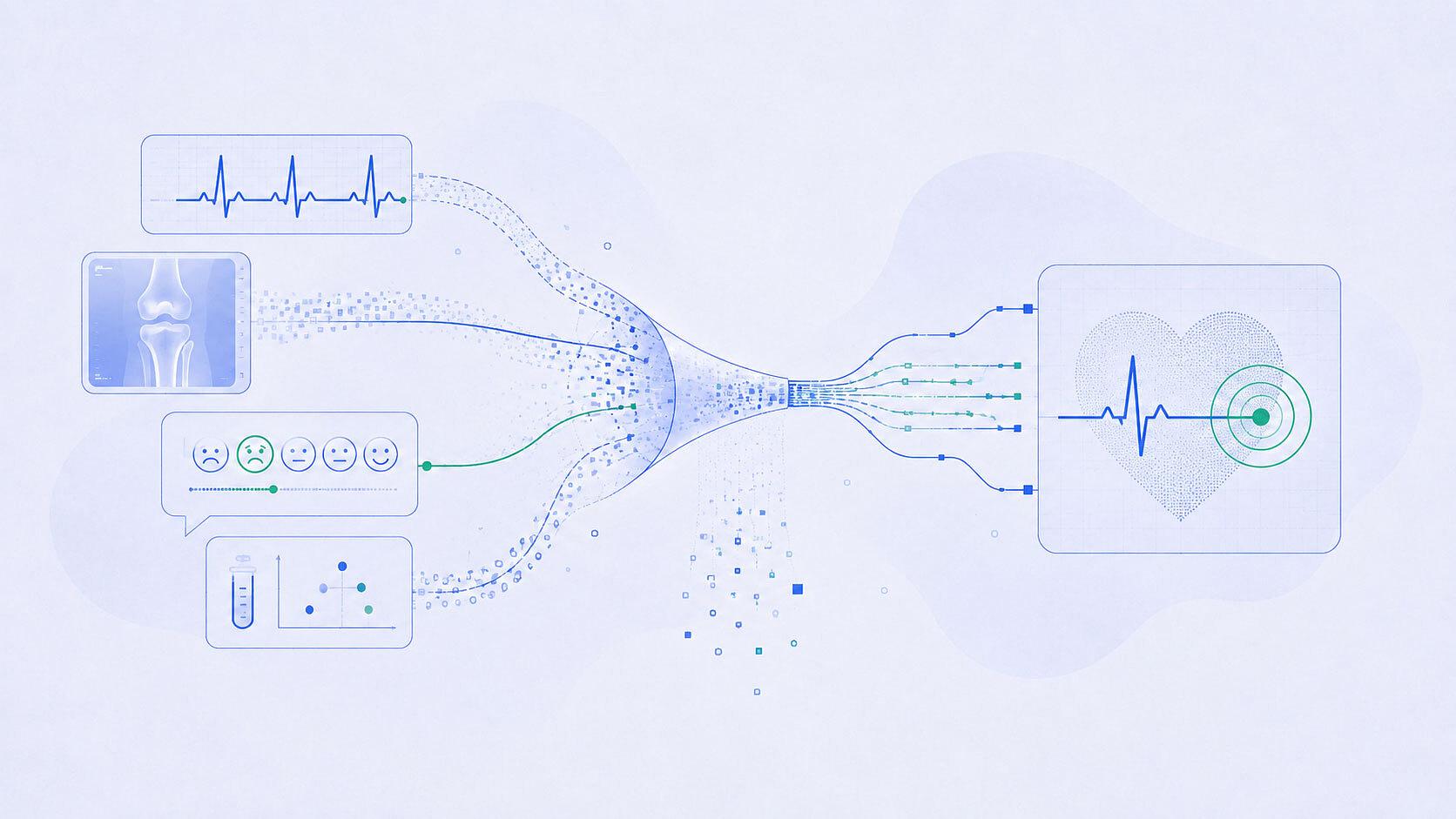
Ziad Obermeyer trained and worked as an ER physician, and now focuses on creating algorithms to catch things doctors miss: sudden cardiac death risk a normal ECG reading won't flag, or knee pain a radiologist's scan can't explain. On the latest episode of NextLevel, the UC Berkeley professor walks through how his team built a model that found a group of patients at real risk of sudden cardiac death that no existing medical criteria would have caught, and why he thinks data access is the key to unlocking real change in healthcare.

See what doctors missed →

Five Key Takeaways

1. An algorithm found heart risk that standard tests missed entirely.

Trained on 440,000 ECGs linked to death certificates, the model flagged a group with a 7% annual risk of sudden cardiac death, well above the 4.5% rate doctors currently consider high risk, and 85% of them weren't flagged by any existing medical criteria.

2. Getting the right data took a decade. Building the model took weeks.

Obermeyer's team spent years extracting raw ECG waveforms from a vendor's system and navigating privacy law before the actual machine learning even started.

3. The same approach found knee pain that radiologists couldn't see.

An algorithm trained to predict what patients actually said about their pain, rather than to grade the X-ray the way a doctor would, explained nearly five times more of a longstanding racial disparity in reported pain than the standard scale.

4. More monitoring calms false alarms; it doesn't create more.

A nodule spotted on a single chest X-ray looks urgent and often triggers a cascade of scans and biopsies. The same nodule tracked yearly for a decade with no change would likely be left alone.

5. He thinks much of the coming healthcare data revolution will happen outside the hospital.

Cheap sensors and phone-based interpretation mean useful health data no longer needs a specialist or a hospital's infrastructure to be understood, a shift he compares to computing's move from mainframes to PCs.

Read the full conversation →

Looking to understand more about your metabolic health?
Explore our health news and advice site,
Metabolic Insights

228 Park Ave South, PMB 63877, New York, NY 10003