The case for repeated scans ‌ ‌ ‌ ‌ ‌ ‌ ‌ ‌ ‌ ‌ ‌ ‌ ‌ ‌ ‌ ‌ ‌ ‌ ‌ ‌ ‌ ‌ ‌ ‌ ‌ ‌ ‌ ‌ ‌ ‌ ‌ ‌ ‌ ‌ ‌ ‌ ‌ ‌ ‌ ‌ ‌ ‌ ‌ ‌ ‌ ‌ ‌ ‌ ‌ ‌ ‌ ‌ ‌ ‌ ‌ ‌ ‌ ‌ ‌ ‌ ‌ ‌ ‌ ‌ ‌ ‌ ‌ ‌ ‌ ‌ ‌ ‌ ‌ ‌ ‌ ‌ ‌ ‌ ‌ ‌ ‌ ‌ ‌ ‌ ‌ ‌ ‌ ‌ ‌ ‌ ‌ ‌ ‌ ‌ ‌ ‌ ‌ ‌ ‌ ‌ ‌ ‌ ‌ ‌

Why whole-body MRI shows the value of measuring over time

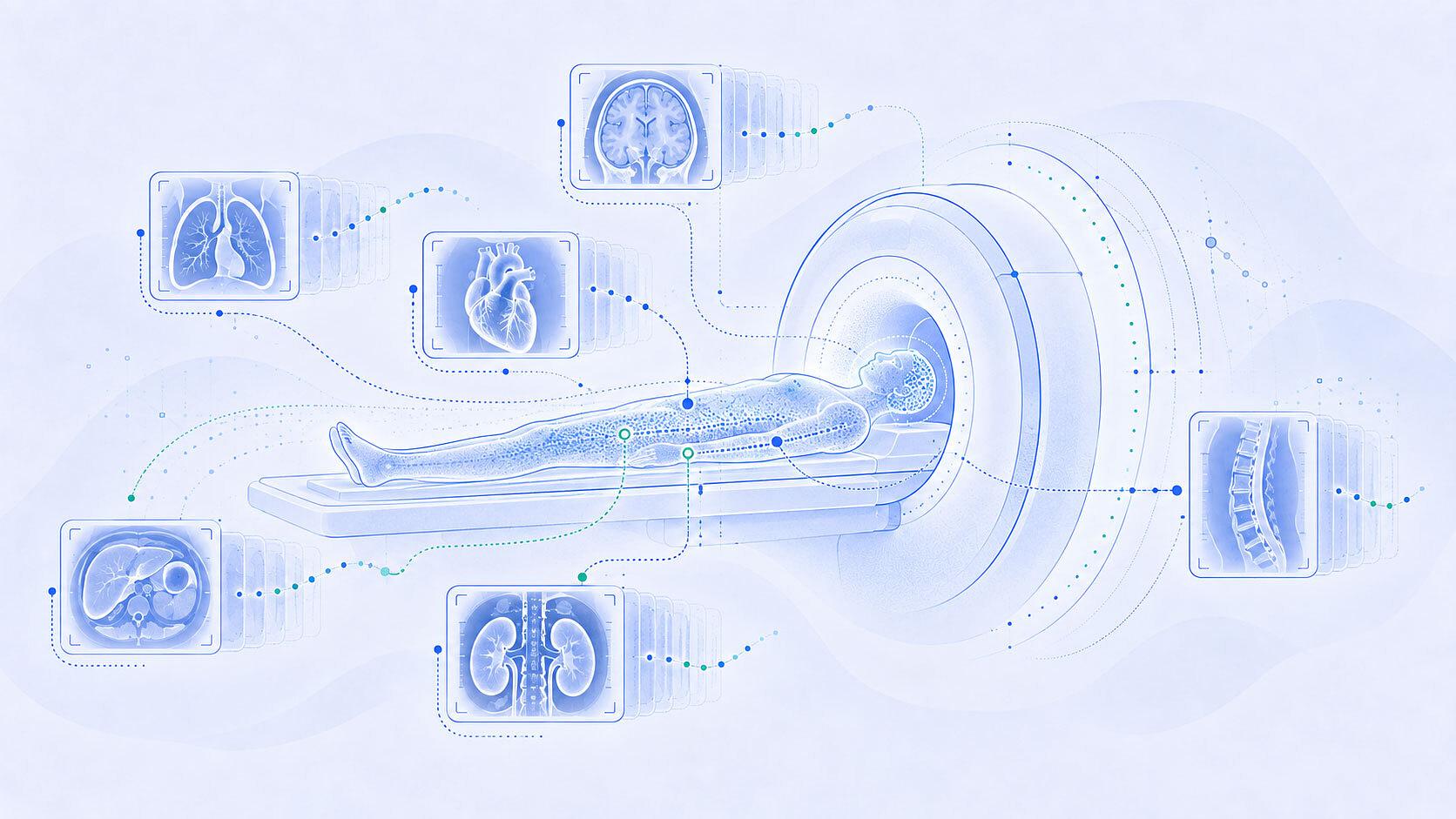
Whole-body MRI is one of the most debated tests in preventive health. Critics say it finds too much and proves too little, and the American College of Radiology doesn't recommend it for people without symptoms or risk factors. On a recent episode of NextLevel, our series on healthcare's shift from episodic to continuous, Dr. Daniel Durand makes the case for it anyway. Durand is chief medical officer of Prenuvo, one of the largest whole-body MRI providers. He's also a Johns Hopkins-trained radiologist who spent a decade working in value-based care. His argument hinges on something almost none of us have had while healthy: more than one scan.

Is the scan overkill? →

Five Key Takeaways

1. Almost every scan finds something.

Across 12 studies of people without symptoms, 95% had at least one abnormal finding and about 30% were flagged for follow-up, though most findings were benign. Durand argues the pressure to chase each one comes from not expecting to look again.

2. A prior scan changes what a finding means.

A lung nodule spotted during an ER visit can trigger a full workup. If years of earlier images show it hasn't changed, it's a known quantity instead of a new worry.

3. Detection is established. Benefit isn't yet.

Studies find confirmed cancer in roughly 2% of people scanned, but there's no long-term evidence yet that this extends lives for average-risk adults. Prenuvo is now following 100,000 people to try to build that record.

4. A clean scan comes with an expiration date.

In Prenuvo's Polaris study, 99.8% of people whose scans showed no sign of cancer had no cancer diagnosed within a year. That reassurance only lasts if someone looks again.

5. Faster scans make repetition realistic.

MRI uses no radiation, so it's safe to repeat. Machine learning has cut Prenuvo's whole-body scan to 30 to 40 minutes, and Durand expects cheaper, more open scanners over time.

Listen to the episode and read the full recap →

Looking to understand more about your metabolic health?
Explore our health news and advice site,
Metabolic Insights

228 Park Ave South, PMB 63877, New York, NY 10003