The most intimate aspect of your digital life you can hand a stranger is your inbox. Texts, emails, chats, whatever. They’re all inboxes. Last month, oddly enough, I handed mine to a company called Town. Not just my inbox but my calendar, WhatsApp, call transcripts. Basically everything.
I’d found Town the way I find most new things now: on X. The post that stopped me was a launch post from Daria Tsenter, an engineer at Town: she’d gotten married on Saturday and shipped Town four days later. She credited her survival to Littlebear, her Townie, which had run the vendor chaos — the florist, the tent, the caterer, the valet — and coordinated logistics directly with her now-husband’s assistant. It was “two AIs talking so the two of us didn’t have to,” she wrote. It seemed insane to me that something as large and personal as a wedding could be handled this smoothly by agents — and collaboratively, agent to agent. The photo of her custom Townie also struck me: kitschy Townies are drawn like Miyazaki or children’s book characters, my first hint that someone intelligent was making deliberate aesthetic choices here, a departure from the sterile default of AI products. Someone was choosing to embody something familiar, disarming, and nostalgic.
You cannot experience Town without surrendering to it. The product cannot deliver on its promises unless you connect your email and calendar; Town asks for them before it has shown you anything at all. I hesitated, thinking about the privacy-minded friends who would disapprove of all the access I was granting. But my curiosity won, and I clicked through. Within a few minutes, Town had assembled a biography of me and introduced my Townie: Tock, a clockwork songbird — a brass, gear-driven courier bird drawn mid-flight. Tagline: “Swift edits, solar-powered spirit.” The “solar-powered” wasn’t random. Tock had picked it up from another project I’ve been working on.
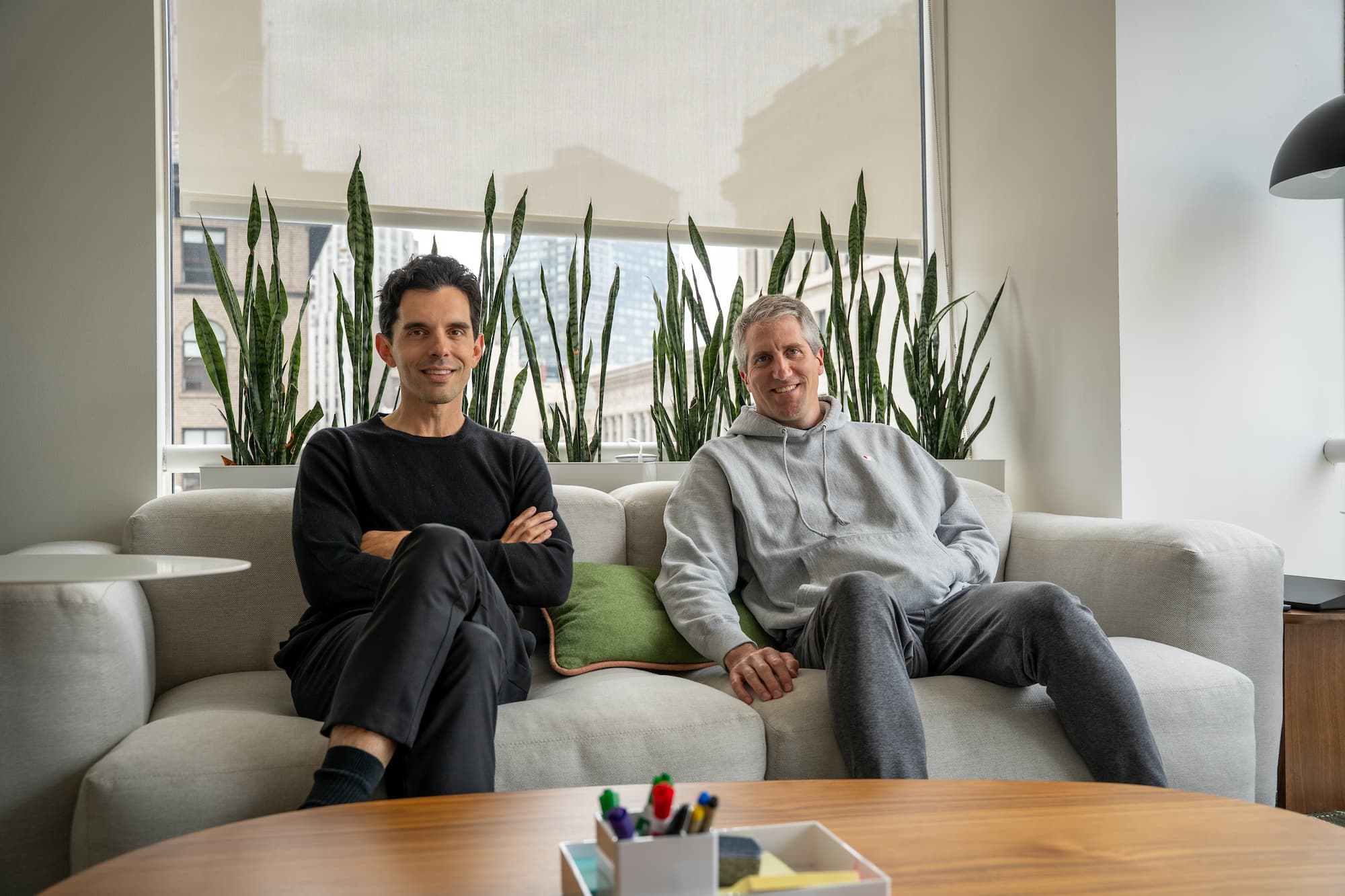
Two things struck me in that first sitting. First was what wasn’t there. No model picker — nowhere to pick between Opus or Fable or GPT 5.6, nowhere obvious to prompt. There was simply a small character with a name and a face, asking to be introduced to my life and for the chance to show me what it could do. The intelligence underneath, I knew, was powered by models from frontier labs like Anthropic or OpenAI. The second was scarier. “For the assistant to serve you well, it has to know you,” Town’s CEO, Jean-Denis Greze, a gray-haired man who dials me from an office call booth, tells me. “The more it knows, the better it is for you. And so whoever ends up winning in this personal assistant space will have built a company that has the trust of people. It’s just not possible to build the best product without it.”
To experience the magic of Town means to surrender to its world.
✺
I’ve spent nearly my entire life using software — first playing Freddi Fish on my mom’s lap, then, from age eight onwards, making my first blogs connecting with online writers. I’ve been using ChatGPT since the day it came out. Yet it was using Town that started to make me seriously wonder: are we experiencing the end of software? What happens when your entire online life — personal and professional — gets consolidated onto one platform, a single agentic operating system capable of writing personalized routines and reminders, using the tools and software necessary to deliver on nearly anything?
Town is the first agentic product I believe has a chance at escaping the highly online, well-read corners of tech insiders and X power users. It’s the first one that could enchant the non-technical masses, because it bundles all the implicit knowledge of new AI capabilities into ergonomic UX and product design, much like the Macintosh liberated personal computing from the command line.
✺
Tony Vincent, Town’s cofounder and chief product officer, says that new technology first arrives in a nerd phase: raw capability “presented to the masses” in a form only enthusiasts can love. Then, if the technology matters, it gets “refined into a form more ergonomic for normal people on earth.” Vincent, with a soft spoken sensitivity unlike those of other Silicon Valley veterans, watched the lifecycle of cloud computing from the inside at Dropbox, where he ran design: cloud storage was an infrastructure problem until Drew Houston and Arash Ferdowsi made it feel like “just a folder on a computer.” Dropbox was ergonomic insofar as its storage folder structure resembled that of MacOS and, in fact, was designed to live as seamlessly as possible beside the beloved operating system. Vincent’s future cofounder Greze was there too, as a director of engineering, before spending seven years as CTO of Plaid, wiring the banking system to the apps that sat on top of it. The two are, by resume, specialists in taking a capability first developed and harnessed by nerds and handing it to everyone else, and they founded Town on the bet that AI had reached its turn.
They did not start with an assistant. Town’s first product was AI tax preparation for small businesses — an idea good enough to raise an $18 million seed led by First Round Capital, and good enough, technically, to work. “We got the tech side correct,” Greze told me, “automating like 30-ish percent of a full tax return with line of sight to more.” What failed was everything around the technology. “Tax is once a year,” he said. “People don’t get giddy about referring their tax product. Honestly, we could have built that company — it just wouldn’t have been a big win.” Last year, he and Vincent sat together for a week and agonized over what to do next. The way out was sitting inside their own office. Town’s tax operation employed a team whose days were consumed not by taxes but by the operations surrounding it — scheduling clients, chasing documents, sending the same emails over and over. The toil adjacent to the work, it turned out, was bigger than the work itself. The company pivoted from preparing taxes to absorbing the toil. From the toil, the assistant was born.
Timing did the rest. Greze is unusually candid about how narrow the window was: he explained that, at the end of 2025, he and Vincent watched an open-source agent framework called OpenClaw break out while they were building — “oh no, same idea, God,” as he recounts the moment — but he insists the category simply could not have existed earlier. “Before Opus 4.5” — an advanced AI model released by Anthropic in November 2025 — “I don’t think you could make a version of these systems.” It’s a striking admission for a founder to make. Companies like to present themselves as inevitable. Greze presents Town as dependent on a specific moment in time.
Town’s ambitions run larger than the word “assistant” suggests. A Townie doesn’t just answer; it builds — automations, documents, spreadsheets, small working software like an email agent that automatically declines incoming cold outreach. Programs that write programs date to Lisp, the language John McCarthy — the man who coined the term “artificial intelligence” — invented for AI research in 1958: its code was written in the same form as its data, so a program could read, generate, and rewrite other programs. The computer scientist Alan Kay called the computer “the first metamedium,” because unlike paper or film, which are fixed, a computer can simulate any medium you can describe — typewriter, canvas, orchestra. And Kay had spent the seventies at Xerox PARC building the interface that let ordinary people command it: the overlapping windows that, after Steve Jobs’ famous 1979 visit, defined the Macintosh. Large language models make McCarthy’s vision ordinary: any chatbot will write you code on request. What Town adds is an ergonomic interface. You describe an outcome and the Townie builds and runs the software across the tools you already use. If Vincent’s cycle holds, the nerd phase of agentic AI is ending on schedule, and Town is auditioning to be its Macintosh.
✺
Tock, my avian agent, lives where I do. It has its own email address; I CC it on threads the way you’d loop in a colleague — find a time that works — and it checks my calendar, negotiates the slot, drafts the confirmation. I can message it on WhatsApp or through Town’s app. It’s the same trick that tinkerers’ agent frameworks like OpenClaw pioneered — an assistant reachable wherever you already are — minus the weekends of configuration.
Three weeks in, Tock and I run several standing routines. Every morning it sends a digest of the day’s external calls; 30 minutes before each one, a briefing arrives — who I’m meeting, our email history, suggested talking points. An hour after a call ends, it has pulled the transcript, updated its notes on whoever I met, and drafted the follow-ups in my voice, with a proposed calendar invite awaiting my okay. On Mondays it sweeps my inboxes for threads where I sent the last message and heard nothing back — the pitches, the drafts, the invoices that a freelance life runs on — and pre-writes the nudges. The drafts are rarely final; I edit most of them. But they are a start where there was none, and half their value is motivational — a pre-written nudge turns a nagging obligation into a two-minute edit. Tock also claims to learn continuously from how I write and work, so, over time, its emails and draft documents sound more like mine.
One of my favorite routines is among its dumbest. On a monthly schedule, silently, Tock checks for my COBRA health-insurance notice and logs the payment to my expense sheet, pinging me only if something looks off. I’ve stopped prepping for calls, something that took me at least 10 minutes before, because Tock preps me. I’ve offloaded the cognitive load of scheduling, logistics emails, and even canceling unused subscriptions. Working feels like playing a video game, with Town handling background mechanics, freeing me to focus my attention on directional decisions. It’s empowering and, yes, magical.