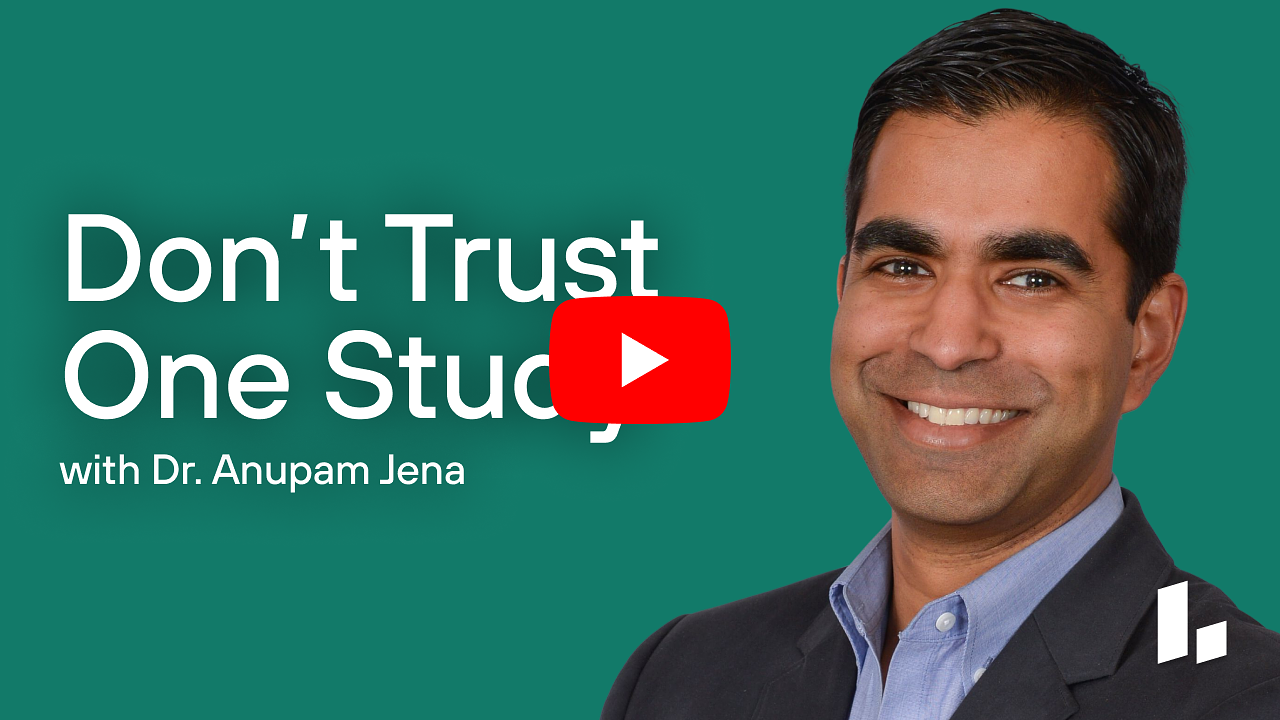
Dr. Anupam Jena on who to believe and why ‌ ‌ ‌ ‌ ‌ ‌ ‌ ‌ ‌ ‌ ‌ ‌ ‌ ‌ ‌ ‌ ‌ ‌ ‌ ‌ ‌ ‌ ‌ ‌ ‌ ‌ ‌ ‌ ‌ ‌ ‌ ‌ ‌ ‌ ‌ ‌ ‌ ‌ ‌ ‌ ‌ ‌ ‌ ‌ ‌ ‌ ‌ ‌ ‌ ‌ ‌ ‌ ‌ ‌ ‌ ‌ ‌ ‌ ‌ ‌ ‌ ‌ ‌ ‌ ‌ ‌ ‌ ‌ ‌ ‌ ‌ ‌ ‌ ‌ ‌ ‌ ‌ ‌ ‌ ‌ ‌ ‌ ‌ ‌ ‌ ‌ ‌ ‌ ‌ ‌ ‌ ‌ ‌ ‌ ‌ ‌ ‌ ‌ ‌ ‌ ‌ ‌ ‌ ‌

How to decide what to do when evidence is thin or conflicting

Maybe it's the cold plunge everyone at your gym won't stop talking about. Maybe it's the statin your doctor mentioned, or a supplement making the rounds in your group chat. You go looking for a straight answer and find a stack of studies that contradict each other, plus experts who read them in completely different ways.

Dr. Anupam Jena works in exactly that mess. He's a professor of health care policy at Harvard Medical School, an internist at Massachusetts General Hospital, an economist, and host of the Freakonomics, M.D. podcast. We asked him how he personally sorts through shaky evidence and decides what's worth trying and who to believe.


Sort through the noise →

Five Key Takeaways

1. Treat any single study as a nudge, not a verdict.

Even a rigorous trial tells you whether something helps people on average, not what it will do for you. Look for the absolute benefit, too, since an impressive percentage can hide a very small real-world change.

2. Big labels don't guarantee a finding applies to you.

A meta-analysis built from weak studies is still weak. A randomized trial tested on a few hundred people at one specific dose may not hold up in everyday life.

3. Ask who the study was done in before asking who paid for it.

Whether the research involved humans or cells, and whether chance decided who got the treatment, matters more than the funding source or the institution's name.

4. Your own experiment counts, if you run it honestly.

Ask what would have happened if you'd done nothing, and repeat the test before you trust the result. Placebo effects are real, so a harmless habit that makes you feel better isn't automatically worth dropping.

5. Start with harm, not effectiveness.

Jena's first question is "could this hurt me?" If the risk is low, he then weighs the data, the biological plausibility, and what it costs to try.

Read the full conversation with Dr. Jena →

Looking to understand more about your metabolic health?
Explore our health news and advice site,
Metabolic Insights

228 Park Ave South, PMB 63877, New York, NY 10003