Finland is an unforgiving place for much of the year. The Finnish summer, which emerges in mid-June, is all too brief. By late August the cold breeze returns, followed by the rain, the painfully short days, and the seemingly endless months of snow. The Finns, like most peoples who inhabit such foreboding climates, are resilient and clever. But that stoic resilience — something the Finns call sisu — fails to explain in full how an isolated country of just 5.5 million, whose native language is spoken nowhere else, which shares an 830-mile land border with Russia and conducts over 95 percent of its trade by sea (an island, practically) has managed to have such an outsized impact on the world.
The Nordic state has a long tradition of producing great composers, Jean Sibelius and Kaija Saariaho among them, architects, and soldiers. Among America's monuments to the Finnish architectural tradition is Eero Saarinen's distinctive Main Terminal at Dulles Airport. But for much of its history, Finland was a poor and desolate country, a place where northern Europe's great powers went to battle one another for primacy. For six centuries it was an impoverished backwater of the Swedish Empire, its southern coast colonized by Swedes who remain a significant linguistic minority there today. In 1808, after Napoleon and Tsar Alexander I conspired to force Sweden into their continental blockade of Britain, Russian forces occupied Finland and ultimately wrested it from Stockholm.
Finland became a Grand Duchy of the Tsar, and under this arrangement enjoyed a remarkable degree of autonomy by Russian standards, with its own central bank, even a customs border with the rest of the empire to the east. While Finns served at the highest levels of the Russian imperial court, Russians were forbidden from serving in Finland's administration or buying land without first obtaining Finnish citizenship. Under these conditions, Finland thrived during the Industrial Revolution and entered the 20th century as a modern nation with a high standard of living. Amidst the upheavals of 1917, when Russia was consumed by the Bolshevik revolution, Finland declared its independence from Petrograd. After emerging from a fratricidal civil war between the communists and the anti-Bolshevik “whites,” the Finnish constitution and its stable governance have persisted to this day.
That Finland survived the 20th century as a sovereign state is nothing short of remarkable. As Europe succumbed to political extremism during the 1930s, Finland resisted. But its geographic position between rival great powers made it particularly vulnerable. When Germany and the USSR conspired to divide Europe between themselves, they did so at Finland's expense: the Molotov-Ribbentrop Pact of August 1939 contained a secret provision giving Stalin a free hand in the Baltic region, including Finland.
In October 1939, after the invasion of Poland had concluded, a Finnish delegation was summoned to Moscow, where Stalin demanded that it cede territory around Leningrad and grant the USSR a military base at Hanko on the southern coast. Finland agreed to move the border but refused to cede the base. In November, Stalin’s army invaded. During the Winter War, the Finns defended valiantly for over 100 days against an army that would eventually exceed one million soldiers. Ultimately, they made peace under terms even worse than what had originally been proposed. Winston Churchill described the invasion as “a despicable crime against a noble people.”
The Finns were eager to reverse their fortunes. In 1941, coinciding with Hitler’s invasion of the USSR, Finland invaded its former territories in what became known as the Continuation War. Ultimately, this too ended in defeat, but one that preserved Finnish sovereignty against the odds. The armistice signed in Moscow in September 1944 was punishing. Finland ceded Viipuri, its second-largest city; the strategic Arctic port and nickel mines of Petsamo; and a Soviet naval base on the Porkkala peninsula near Helsinki. It also required huge war reparations to the USSR in the form of Finnish industrial goods. All told, the wars against the Soviet Union claimed 2.3 percent of the Finnish population.
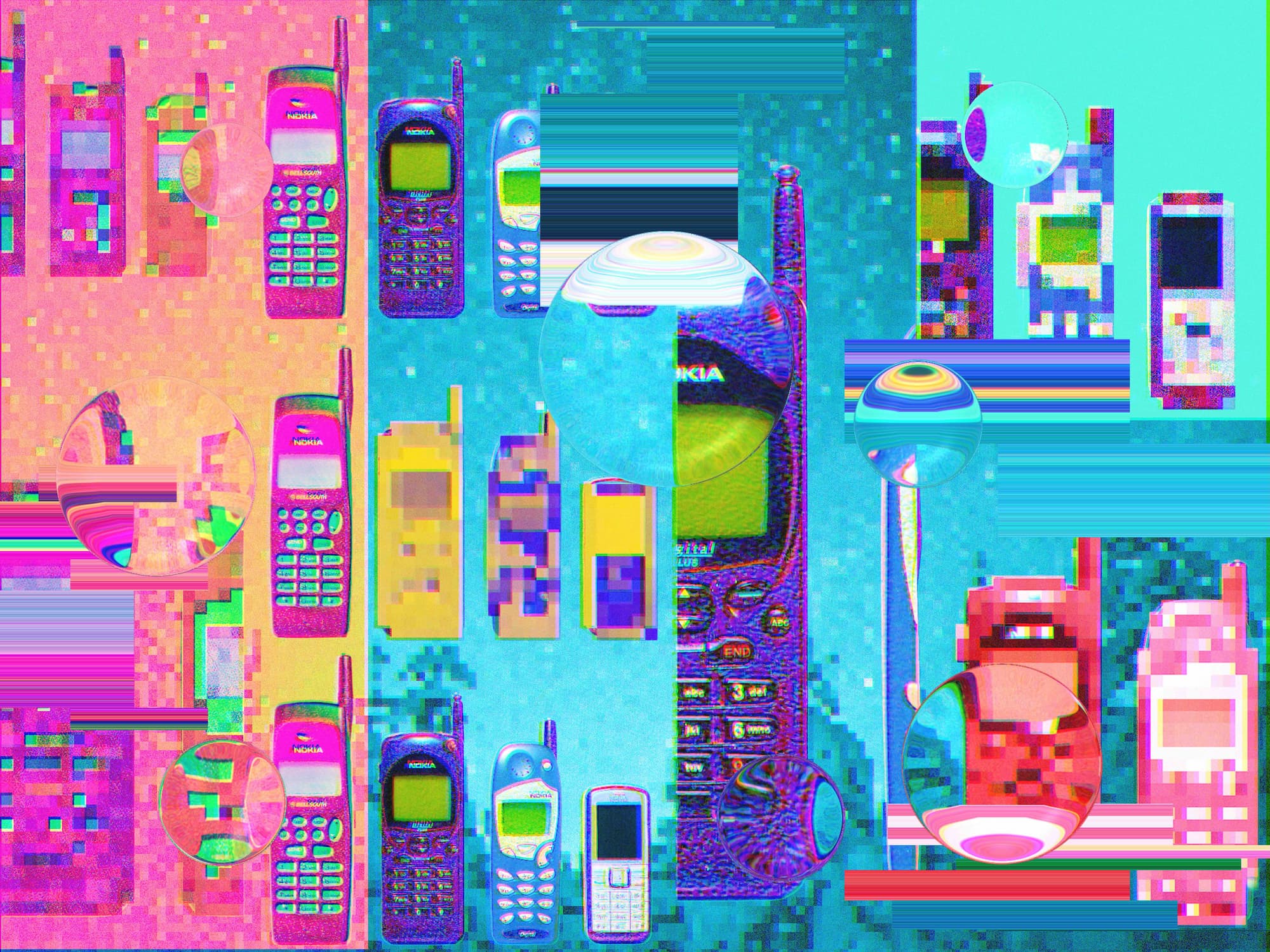
Meanwhile, Nokia was manufacturing cables and rubber boots for the Finnish armed forces. For decades after the war, the company operated as a loosely organized industrial conglomerate. Under the terms of the Soviet armistice, Nokia supplied communications cables to the Soviet Union. In 1973, the company began producing radio phones for the Finnish military in the northern city of Oulu, and in 1979 it set up a mobile phone joint venture with the Finnish TV company Salora, Mobira, and headquartered it in the small southwestern city of Salo. Nokia held roughly 13 percent of the global mobile market in the 1980s. Its phones sold in America under the Tandy brand name, but in those early years, Motorola outcompeted it, commanding 22 percent of the modest global market to Nokia's 10 by 1990.
A triple merger with Finnish Rubber Works and Finnish Cable Works in 1967 had made Nokia into the unified corporate entity that has persisted to this day. But the insular nature of the postwar Finnish economy had prevented Nokia from becoming a global business, and severely restricted its access to capital. The Finnish economy had been tightly controlled since the Second World War, defined by currency controls, fixed exchange rates, and strict protectionism. At the beginning of the 1980s, capital controls were so strict that one needed special permission from the Bank of Finland to take 10,000 markkas — about $1,600 USD at the time — out of the country. In a very rare exception, Citibank had been permitted to operate a Finnish subsidiary that was limited to mediating foreign loans. In 1984, the Bank of Finland finally suspended its capital controls, and foreign investment began to flood into the small Nordic state.
It was from Citibank's Helsinki office that Nokia's charismatic, risk-tolerant, expansionist CEO Kari Kairamo recruited the 35-year-old Jorma Ollila in 1985, placing him in charge of the conglomerate's international finance. From that post, Ollila negotiated a significant investment from George Soros and listed Nokia on the London Stock Exchange. He had already formed a sharp assessment of the company from his banking days. “The company was too diverse,” he recalled in his memoir. With nine divisions producing everything from batteries to rubber boots and firearms, the lack of focus seemed to be Nokia's single greatest weakness. It was an early diagnosis that would ultimately define his long-term strategy to streamline the business as CEO, a role he took in 1992. Even before that, while head of finance in the early 1980s, he began implementing such changes. Drawing on his international banking contacts, Ollila began selling off the less efficient branches of the business, beginning with the most sacrosanct: the historic paper division. In 1989 he brokered its sale into a joint venture between James River of Richmond, Virginia, and Montedison of Milan, beginning Nokia's withdrawal from the paper business after 125 years.
In 1990 Ollila was placed in charge of mobile phones as Nokia’s business seemed increasingly endangered. The timing could hardly have been more difficult for embarking upon such a radical transformation. The early 1990s were brutal for Finland. Partly due to the collapse of the Soviet Union and its vast market, Finnish GDP shrank by more than 10 percent and the stock market lost half its value. Nokia itself came close to disappearing. Informal discussions began in March 1991 to prepare the company for sale to Ericsson, but the Swedish firm walked away because Nokia's consumer electronics division, especially its TV business, was losing too much money.
Instead, Ollila sat down with Olli-Pekka Kallasvuo, another ex-banker, soon to be Nokia’s CFO, and determined, on a piece of scrap paper, that the mobile phone and network businesses were the only areas of Nokia’s conglomerate worth holding on to. Their projections for the new mobile phone and networks strategy turned out to be a massive underestimation: By 2000, Nokia's revenue reached $31.1 billion, with profits of $5.9 billion. For years, Ollila carried in his wallet a newspaper clipping from 1995, a Financial Times column concluding that Nokia was doomed. By 2007, media narratives had shifted considerably. Forbes was running a cover story with the headline: “Nokia. One billion customers — can anyone catch the cell phone king?”
In the first quarter of 2007, Nokia sold nearly 92 million phones, about 36 percent of the entire global market and up from 34 percent the previous year. It was nearly double the share of its closest rival, the Schaumburg, Illinois-based Motorola, whose position was slipping. This momentum was due to products like the N95, a dual-slide smartphone with 8 million units sold that quarter. At a moment when the worldwide market itself was expanding 14 percent year over year, Nokia was capturing more than one of every three phones sold on Earth.