It's probably already on your blood test results ‌ ‌ ‌ ‌ ‌ ‌ ‌ ‌ ‌ ‌ ‌ ‌ ‌ ‌ ‌ ‌ ‌ ‌ ‌ ‌ ‌ ‌ ‌ ‌ ‌ ‌ ‌ ‌ ‌ ‌ ‌ ‌ ‌ ‌ ‌ ‌ ‌ ‌ ‌ ‌ ‌ ‌ ‌ ‌ ‌ ‌ ‌ ‌ ‌ ‌ ‌ ‌ ‌ ‌ ‌ ‌ ‌ ‌ ‌ ‌ ‌ ‌ ‌ ‌ ‌ ‌ ‌ ‌ ‌ ‌ ‌ ‌ ‌ ‌ ‌ ‌ ‌ ‌ ‌ ‌ ‌ ‌ ‌ ‌ ‌ ‌ ‌ ‌ ‌ ‌ ‌ ‌ ‌ ‌ ‌ ‌ ‌ ‌ ‌ ‌ ‌ ‌ ‌ ‌

The number on your blood count worth a second look

If you've ever had a routine blood test, you've almost certainly had your RDW measured. It comes standard on a complete blood count, sitting among a dozen abbreviations most people skim past, and doctors often skip it too unless something else looks off. But this one number captures something the others don't: how consistently your body is producing red blood cells. That makes it an early signal worth understanding, because it can shift before more familiar markers do, and it has been linked to health risks well beyond your blood.

The number doctors skip →

The Basics

What it is

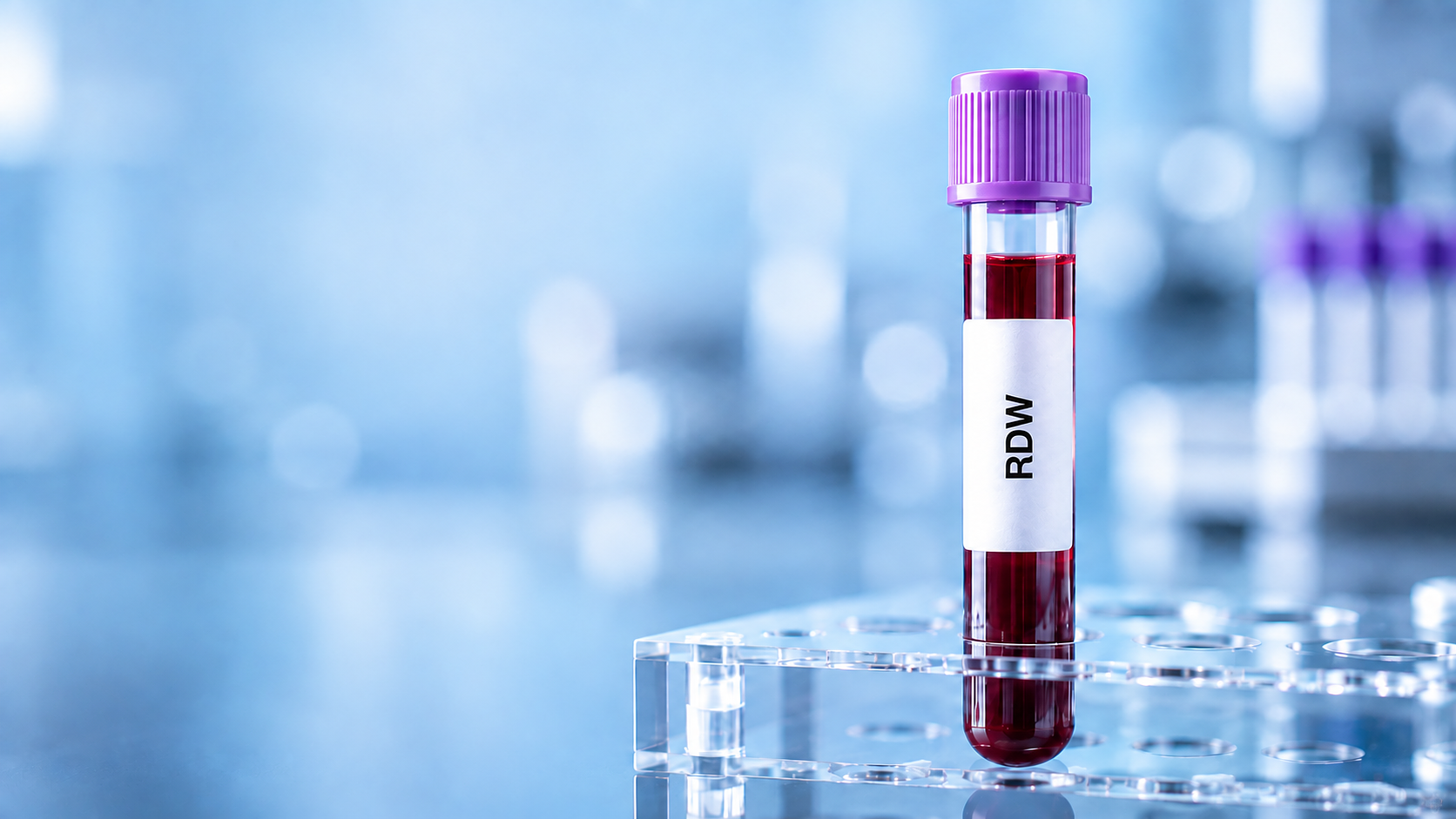
Red cell distribution width measures how much your red blood cells vary in size. Healthy bone marrow turns out cells that are fairly uniform. A higher RDW means the sizes are more mixed.

Why it matters

RDW often rises early in iron, B12, or folate deficiency, sometimes before hemoglobin drops. In population studies, higher RDW is also associated with heart disease and higher overall mortality risk, though researchers don't yet fully understand why.

Healthy range

Most labs consider roughly 11% to 15% normal. A mildly high reading on its own is rarely cause for alarm. Think of it as a prompt to look closer.

What moves it

Diets low in iron, B12, or folate can push it up, as can heavy drinking, smoking, crash dieting, and plant-based diets without proper supplementation. Chronic inflammation and liver or kidney disease can raise it too. Correcting an underlying deficiency is usually what brings it back down.

When to test

You likely already have a result, so check your most recent blood work. Read it alongside MCV (average red cell size): together they help distinguish iron deficiency from B12 or folate deficiency. An RDW that climbs over time is worth raising with your doctor.

Read our full guide to RDW →

Looking to understand more about your metabolic health?
Explore our health news and advice site,
Metabolic Insights

228 Park Ave South, PMB 63877, New York, NY 10003
