How real stimulation is already helping patients. ‌ ‌ ‌ ‌ ‌ ‌ ‌ ‌ ‌ ‌ ‌ ‌ ‌ ‌ ‌ ‌ ‌ ‌ ‌ ‌ ‌ ‌ ‌ ‌ ‌ ‌ ‌ ‌ ‌ ‌ ‌ ‌ ‌ ‌ ‌ ‌ ‌ ‌ ‌ ‌ ‌ ‌ ‌ ‌ ‌ ‌ ‌ ‌ ‌ ‌ ‌ ‌ ‌ ‌ ‌ ‌ ‌ ‌ ‌ ‌ ‌ ‌ ‌ ‌ ‌ ‌ ‌ ‌ ‌ ‌ ‌ ‌ ‌ ‌ ‌ ‌ ‌ ‌ ‌ ‌ ‌ ‌ ‌ ‌ ‌ ‌ ‌ ‌ ‌ ‌ ‌ ‌ ‌ ‌ ‌ ‌ ‌ ‌ ‌ ‌ ‌ ‌ ‌ ‌

Can we control inflammation before we can measure it?

What if we could treat chronic conditions without drugs? Simply hijacking the body's own signals and tweaking them.

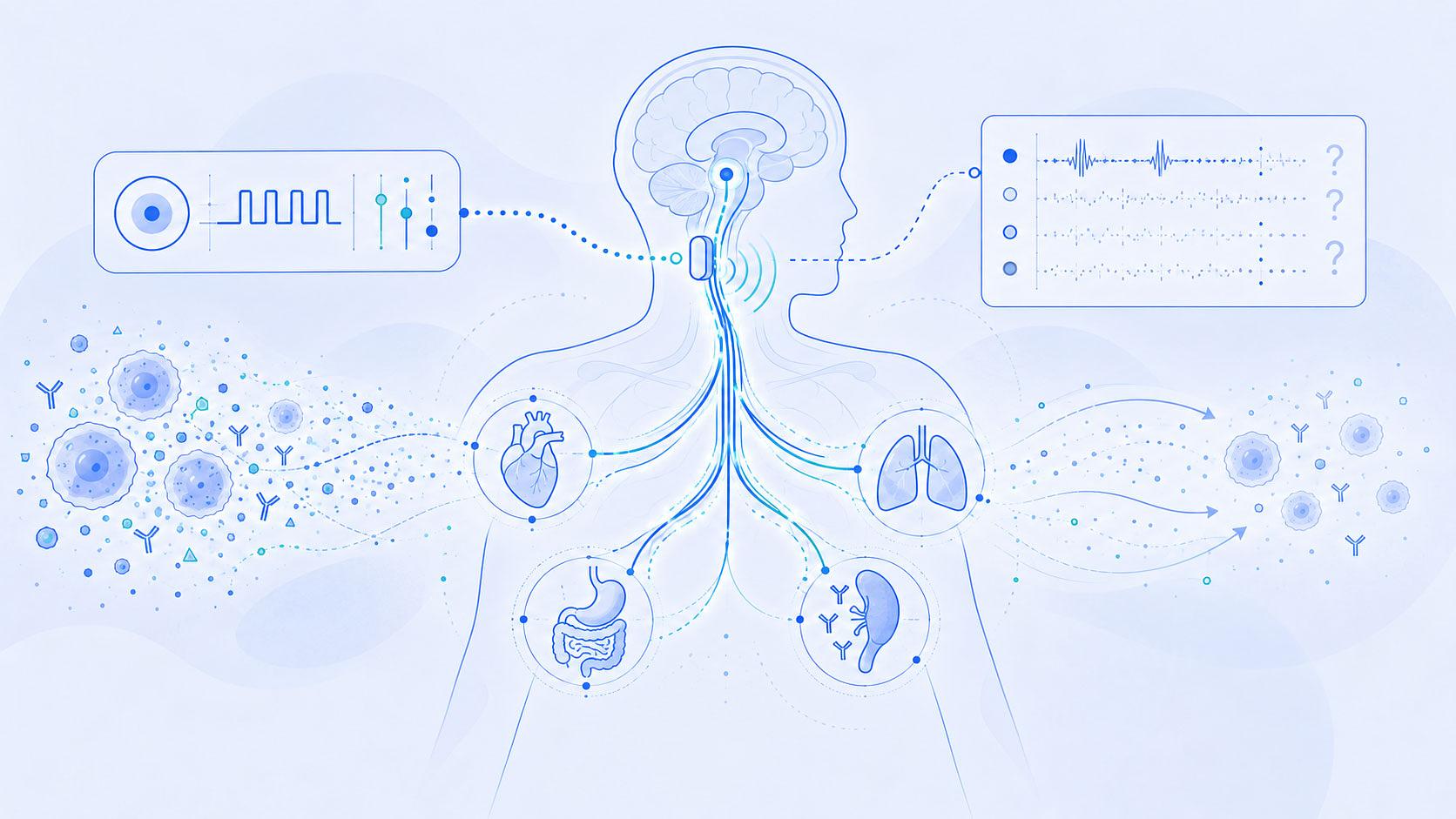
Since July 2025, that's now an option for people with severe rheumatoid arthritis: a pill-size implant stimulates the vagus nerve one minute a day to quiet the condition. The same type of treatment is used for epilepsy, stroke and depression patients, and could move into several more chronic disease. The challenge: We can't yet measure the nerve's signals.

On a recent NextLevel, Dr. Kevin Tracey, who discovered the vagus-inflammation connection 30 years ago, explains why it works, what closing that measurement gap would unlock, and why much of the online conversation is not based on science.

The truth about the vagus nerve →

Five Key Takeaways

1. “The vagus nerve” is really about 160,000 fibers.

You have two vagus nerves, each with 80,000 to 100,000 fibers, and every fiber has a specific job and carries signals in only one direction. That’s why Tracey pushes back on advice to stimulate “the” vagus nerve.

2. A small signal can calm inflammation across the body.

One or two thousand fibers reaching the spleen prompt immune cells to make fewer inflammatory molecules, and those cells carry the effect to the joints. In a trial of 242 patients, 53% improved after a year of stimulation.

3. Without a direct readout, predicting response is hard.

Vagus stimulation has been approved for epilepsy and depression for decades, but only about half of patients benefit, and no one can tell in advance which half. Measuring the relevant fibers is the likeliest way to change that.

4. Mapping the nerve could lead to many more treatments.

The first detailed maps of the human vagus nerve are emerging, the first key step toward theoretical fiber-targeted therapies for diabetes, fatty liver disease, and the gut, plus early warning signs of autoimmune disease. 

5. Common health proxies capture only a slice.

 Tracey says CRP rises with too many things to be a reliable inflammation test, and heart rate variability is noisy and algorithm-dependent. His pick for vagal tone is resting heart rate, though even that reflects only the fibers that slow the heart.

Read the full article →

Looking to understand more about your metabolic health?
Explore our health news and advice site,
Metabolic Insights

228 Park Ave South, PMB 63877, New York, NY 10003