| Thanks for reading The Abstract. This month’s edition is
1,083 words, about a
4-minute read.
|
|
Is there a topic that you’d like to see more of in
The Abstract? Drop us a line at
[hidden]. Want to get
The Abstract in your inbox? Sign up
here.
|
|

|
|
|
|
October 18 is World Menopause Day—a moment to recognize a biological transition that can shape nearly every system in the body and decades of life for women. Its implications extend beyond women's health, offering new insights into the biology of aging for everyone. In this edition of
The Abstract: a new review reframes menopause as an opportunity to support healthy aging, researchers ask whether the postmenopausal ovary contributes to whole-body inflammation, hormone therapy’s timing emerges as an important part of cardiovascular risk, resistance training produces different cognitive benefits before and after menopause, and creatine shows potential beyond the gym for both men and women.
|
|
|
Menopause is more than a reproductive transition
|

|
|
|
Menopause is often treated as a collection of symptoms to manage until they pass. A new review in
Science argues for a much larger view: Menopause is a whole-body transition that can influence how the brain, bones, cardiovascular system, metabolism, and immune system age over the decades that follow.
The scale of the transition is easy to underestimate. Menopause can encompass approximately 40% of the female lifespan, and researchers have documented as many as 72 associated symptoms. Yet just 0.2% of federal health-research funding in North America over a 15-year period went to questions specifically involving menopause. The review connects the timing, type, and symptom burden of menopause with later risks including osteoporosis, cardiovascular disease, metabolic syndrome, and dementia. It also emphasizes that menopause hormone therapy is not a single treatment: More than 200 combinations of hormones, doses, formulations, and delivery methods can produce different benefits and risks.
This is a review of existing evidence, not a new clinical trial. But its central argument is consequential: Menopause should not be treated as an isolated reproductive event—or with one-size-fits-all advice. It may be a pivotal opportunity to measure changing health risks, relieve symptoms, and support healthier aging with greater precision.
|
|
|
The Expert’s Take:
|
|
“For too long, menopause has been viewed mainly as the end of reproduction, instead of an important transition in women's health and aging. Our ovaries age much faster than the rest of our bodies, and this process starts long before menopause, yet we are only beginning to understand how reproductive aging is connected to the aging of the whole body. Hormone therapy has an important role for many women, but we also need to understand why ovaries age so early and what we can do about it. I hope that more research will lead to new ways to improve women's health and help women live longer and healthier lives, both before and after menopause.”
|
| Yousin Suh, Ph.D.
|
|
Charles and Marie Robertson Professor of Reproductive Sciences in Obstetrics, Professor of Genetics and Development, Director of the Reproductive Aging Program at the Vagelos College of Physicians and Surgeons at Columbia University, and Elysium Scientific Advisory Board member
|
|
|
|
|
|
|
THIS MONTH
|
|
What We’re Reading
|
|
These are third-party articles about science that we find interesting but have no relationship to Elysium or any of our products. Elysium’s products are not intended to screen, diagnose, treat, cure, or prevent any disease.
|
|
Creatine’s benefits may begin before the workout
|
|
Creatine is known for helping muscles perform during exercise. A new study suggests it may also support muscle before a workout program begins. Researchers followed 64 sedentary adults ages 45 to 65 for 12 weeks. Among those who did not join the exercise program, participants taking 10 grams of creatine daily gained approximately 2.4 pounds of lean tissue and improved their leg- and bench-press strength. Participants who combined creatine with resistance and aerobic training gained nearly three pounds of lean tissue, lost fat, and made greater strength and endurance gains than those taking a placebo. Because participants chose whether to enter the exercise program—and each final group was small—the study cannot cleanly separate every effect. Creatine is not a substitute for movement, but the findings suggest it may help middle-aged adults build or preserve lean tissue even before structured exercise enters the picture. (Journal of the International Society of Sports Nutrition)
|
|
For hormone therapy, timing may matter
|
|
The cardiovascular effects of menopause hormone therapy have been debated for decades. A new analysis followed 2,737 women with hot flashes or night sweats and used their health data to simulate a series of clinical trials. Over 20 years, women who began hormone therapy had an estimated 22% lower risk of a cardiovascular event than those who did not. The association was strongest among women who started within 10 years of menopause and among Black women. But the study was observational, not a randomized trial, and women who choose hormone therapy may differ from those who do not in ways the analysis could not capture. The results should not be used to prescribe hormone therapy for heart-disease prevention. Instead, they strengthen a more nuanced idea: The effects of hormone therapy may depend not only on what someone takes, but when she begins. (JAMA Internal Medicine)
|
|
Lifting weights may support the menopausal brain
|
|
Resistance training builds muscle and bone, but its effects may also reach the brain—and change across the menopausal transition. In a pilot trial, 35 women ages 45 to 60 completed either nine months of supervised resistance training twice a week or remained on a waitlist. The cognitive results split by reproductive stage: Training improved episodic memory during perimenopause and set-shifting—the ability to move flexibly between tasks—during early postmenopause. In early postmenopausal participants, training also increased blood volume in a region of the prefrontal cortex during a cognitive task. The study is too small to establish a workout prescription, and some findings could be due to chance. But it suggests that perimenopause and postmenopause may be distinct windows in which the brain responds differently to the same exercise. (BMC Medicine)
|
|
The ovary doesn’t retire at menopause
|
|
After releasing its last egg, the ovary is often described as dormant. Emerging research suggests otherwise. The postmenopausal ovary is approximately 30% smaller, but its connective tissue remains biologically active, producing testosterone and smaller amounts of estrogen, progesterone, and other hormones. Studies in humans, mice, and monkeys also point to changes involving immune cells, fibrosis, cellular senescence, and inflammatory signaling as the ovary ages. That raises an intriguing possibility: Molecules released by the postmenopausal ovary could influence inflammation and aging elsewhere in the body. For now, that systemic connection remains a hypothesis—not a reason to remove healthy ovaries or alter care. But the research recasts the ovary as an organ that may continue shaping health long after reproduction ends. (Science)
|
|
|
|
|
TERM OF THE MONTH
|
|
Vasomotor symptoms
|
|
/ˌvā-zō-ˈmō-tər ˈsimp-təmz/
|
|
Symptoms caused by changes in the body’s temperature regulation during the menopausal transition, most commonly hot flashes and night sweats. They can disrupt sleep and quality of life and may continue for years after menopause.
|
|
|
|
|
|
AGING 101
|
|
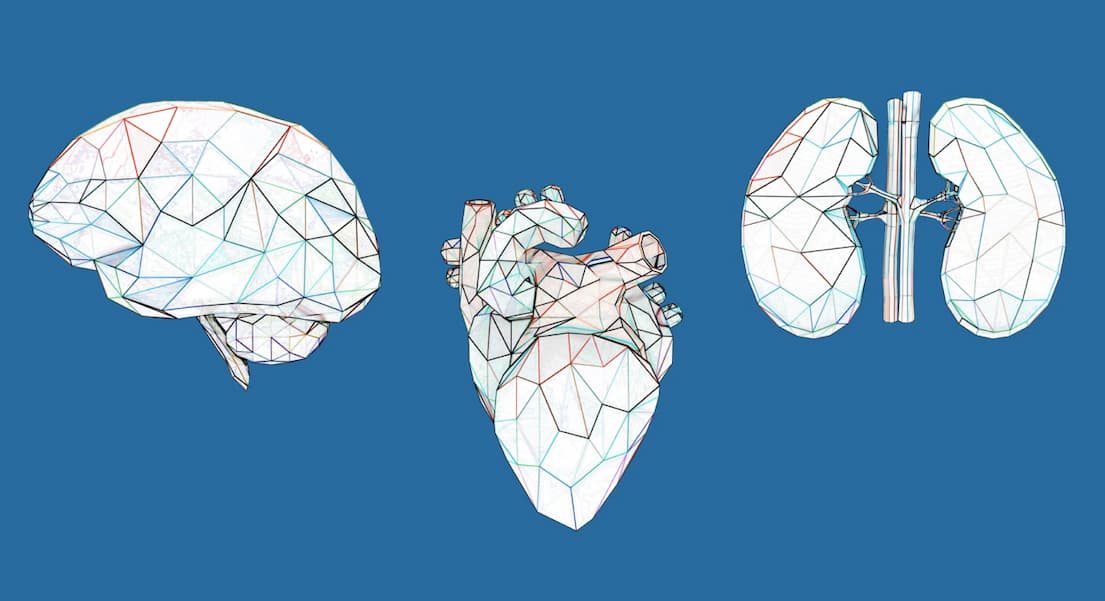
Your organs don’t all age at the same rate
|
|
|
|
|
A single biological age cannot capture every change happening throughout the body. The brain, heart, immune system, kidneys, and other systems can follow distinct aging trajectories—shaped by genetics, lifestyle, environment, and major biological transitions. Learn how scientists measure system-specific aging and what it could reveal about health risks that a single number might miss. (Read more)
|
|
|
Stay connected with Elysium via text
|
|
|
|
|
Stay connected with Elysium via text
|
| Sign up for texts to get product news, longevity insights, exclusive offers—and 25% off your first monthly subscription.
|
|
|
|
|
|
|
|
|