An author of the 2026 guideline explains  ‌ ‌ ‌ ‌ ‌ ‌ ‌ ‌ ‌ ‌ ‌ ‌ ‌ ‌ ‌ ‌ ‌ ‌ ‌ ‌ ‌ ‌ ‌ ‌ ‌ ‌ ‌ ‌ ‌ ‌ ‌ ‌ ‌ ‌ ‌ ‌ ‌ ‌ ‌ ‌ ‌ ‌ ‌ ‌ ‌ ‌ ‌ ‌ ‌ ‌ ‌ ‌ ‌ ‌ ‌ ‌ ‌ ‌ ‌ ‌ ‌ ‌ ‌ ‌ ‌ ‌ ‌ ‌ ‌ ‌ ‌ ‌ ‌ ‌ ‌ ‌ ‌ ‌ ‌ ‌ ‌ ‌ ‌ ‌ ‌ ‌ ‌ ‌ ‌ ‌ ‌ ‌ ‌ ‌ ‌ ‌ ‌ ‌ ‌ ‌ ‌ ‌ ‌ ‌

Lower, earlier, longer: The new rules for your cholesterol

Cholesterol is one of medicine's most studied topics, and somehow still one of the most argued about online. This year, the people who study it for a living published their answer. The 2026 ACC/AHA dyslipidemia guideline has more than 40 authors and the endorsement of over 10 professional societies, and it’s the playbook your doctor should be using when they read your labs.

Dr. Seth Martin, a preventive cardiologist at Johns Hopkins, helped write it. He also co-created the equation most labs now use to calculate your LDL. On A Whole New Level, he explained what changed, using one filter for every test: will the result change what you do?

See the new guidelines →

Five Key Takeaways

1. Time matters as much as the number.

Plaque builds with cumulative exposure to atherogenic particles, so the guideline favors lowering LDL earlier in life and keeping it low instead of waiting until you cross a line. 

2. Specific LDL goals are back.

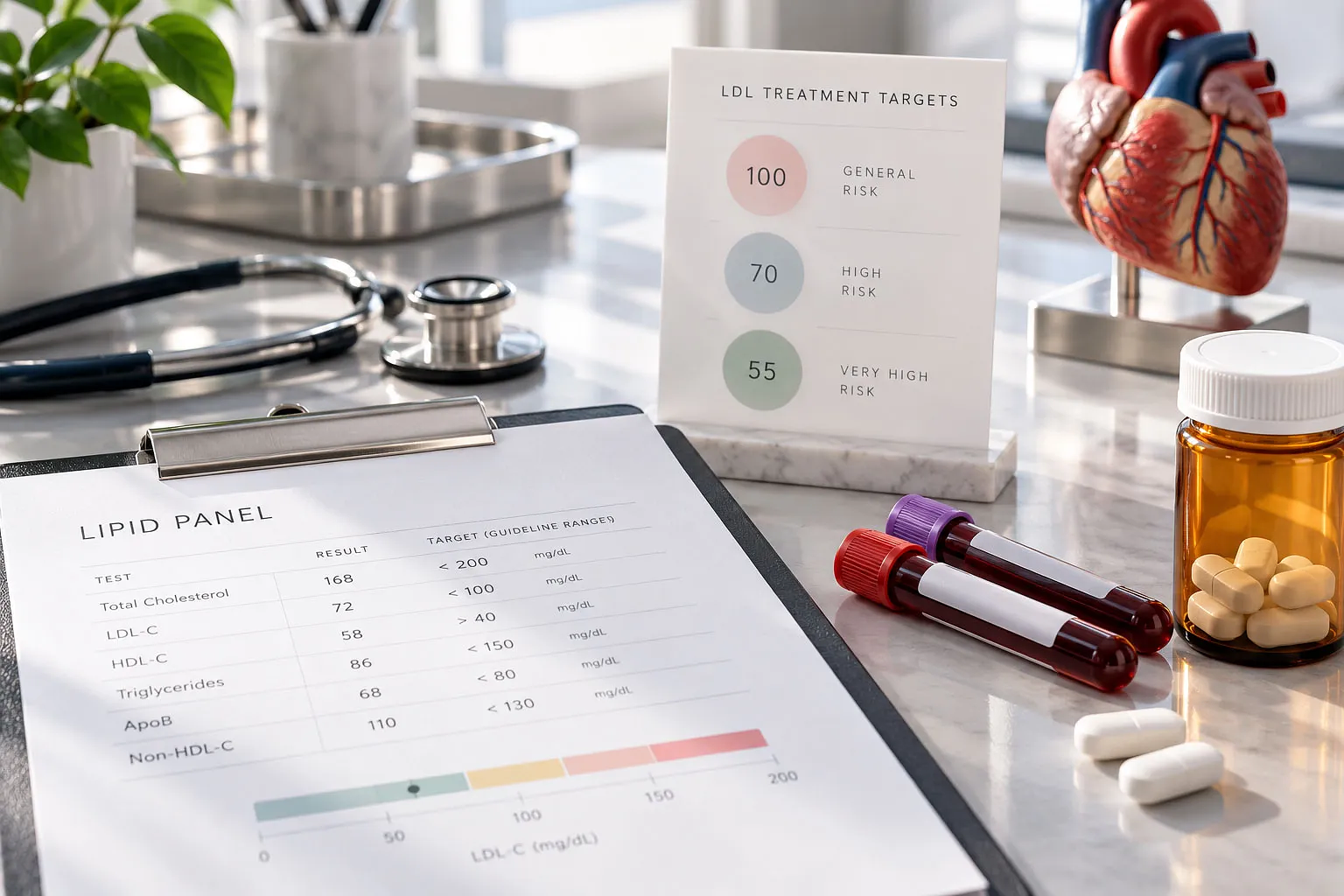
Depending on your risk, the target is below 100, 70, or 55 mg/dL, with matching and lower-than-before goals for non-HDL and ApoB. A new calculator called PREVENT estimates that risk, and its 30-year view is especially useful for younger people.

3. ApoB has a defined role.

For most people, LDL, non-HDL, and ApoB point in the same direction. ApoB is most useful for confirming you're at goal once on treatment, and for people with insulin resistance, Type 2 diabetes, or high triglycerides, where it can catch particles LDL misses.

4. Skip the particle-size panels.

The guideline recommends against routine advanced lipoprotein tests because they aren't standardized and there's no evidence-based way to act on the results. Large, "fluffy" LDL particles aren't harmless, either.

5. Lifestyle, then statins; supplements optional.

Lifestyle is the foundation, though it often lowers lipids by only about 10 percent, and most people feel no different on a statin than off one. In one trial, six popular supplements, including fish oil and red yeast rice, did no better than placebo, while a low-dose statin cut LDL by about 35 percent.

Read Dr. Martin's full breakdown →

Looking to understand more about your metabolic health?
Explore our health news and advice site,
Metabolic Insights

228 Park Ave South, PMB 63877, New York, NY 10003