|
 |
| ||

Model Behavior: Rick Rubin
“I’m certainly not afraid of [AI]. With any new instrument, you can make bad sounds, and then someone figures out how to do it well.”
|
| ||||||||||||


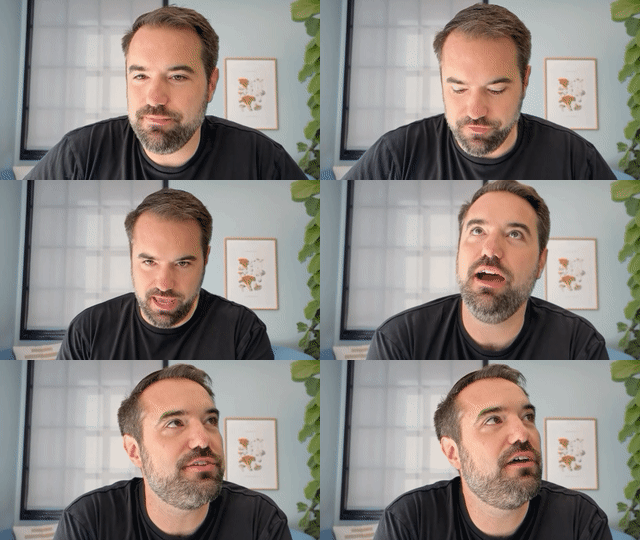
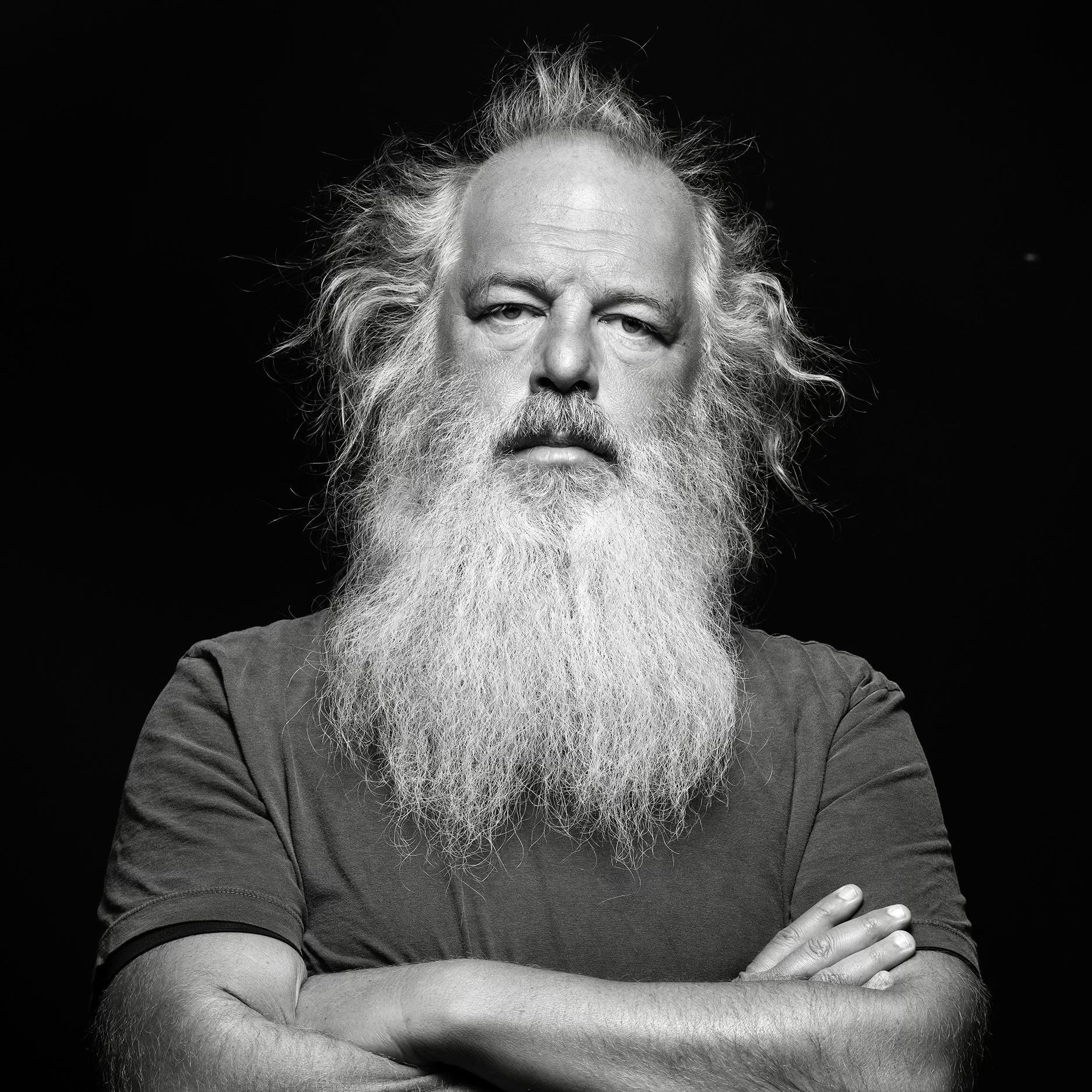
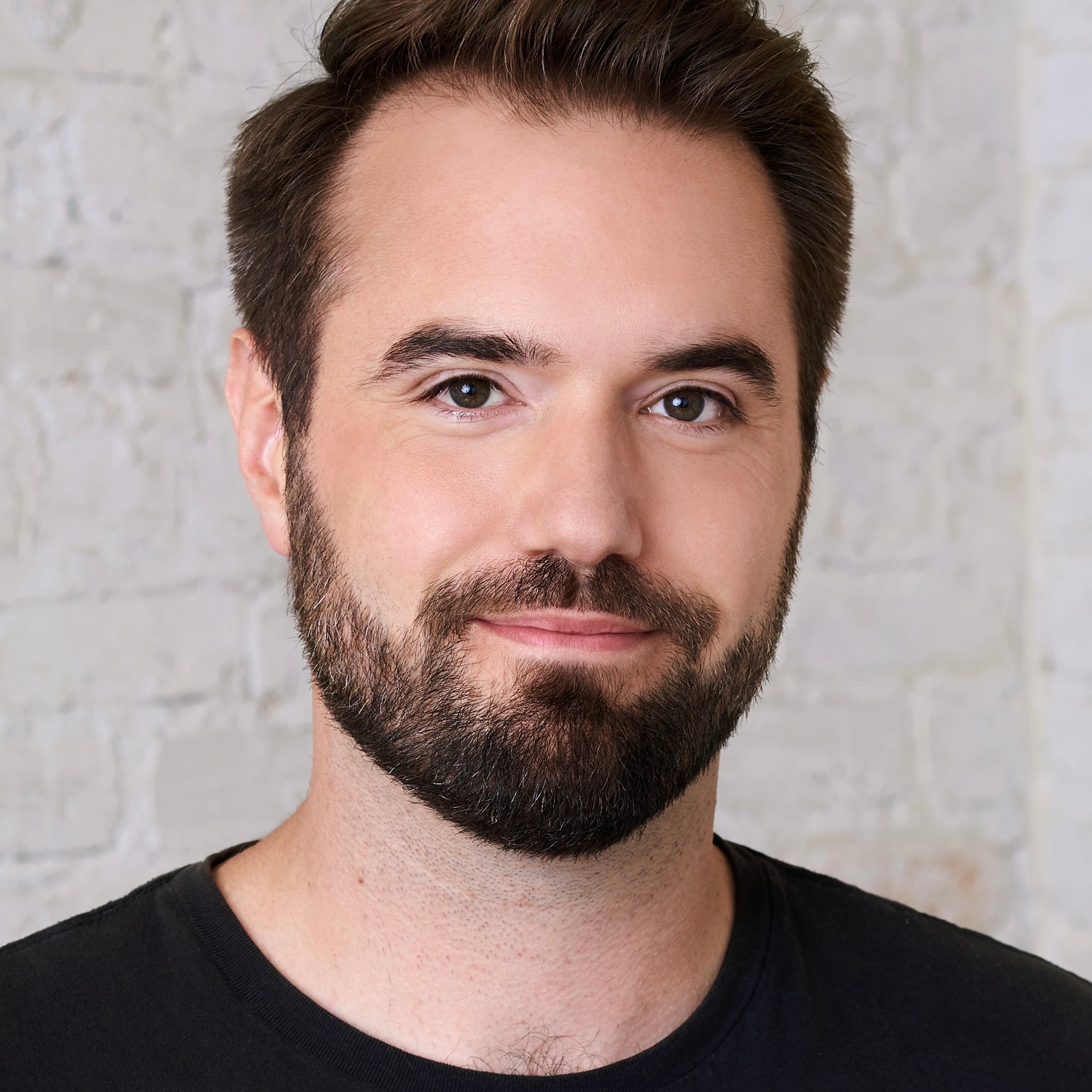
In this special edition of Model Behavior—our series that asks top thinkers, writers, and creatives how they consider and use AI—Substack founder Chris Best speaks with legendary music producer Rick Rubin. Rick writes The Creative Act: Thoughtforms & Innerworks on Substack, where he shares reflective insights and practical creative exercises drawn from his approach to art and awareness.
Rick had questions for Chris about Substack’s decision to introduce the Pangram integration, a tool that lets readers check whether text was likely written by hand or with AI assistance. Chris, in turn, took the opportunity to ask Rick where he lands on AI in his own creative life, from writing to music. Along the way, they get into which genres AI music might be most successful in, the story of the discarded wah-wah pedal that helped define Jimi Hendrix’s sound, Rick’s slow conversion to Nine Inch Nails, and a sci-fi scenario where every album and film could be made for an audience of one.
What follows is a lightly edited version of their conversation.
 |
Chris Best: I’ll be honest about where I am on AI writing, AI generation, and AI creative assistance: I don’t know what any of the answers are yet. This stuff is hitting the world like a tidal wave, and I don’t think anybody knows exactly what to think. There’s such a wide range of perspectives. And I’m building a platform, so I don’t want to wait until every answer is figured out before we make it good. I’d love to hear where your head is at.
Rick Rubin: It’s so early. We have no idea how AI will influence writing, or whether it will ever be good, or what its strengths and weaknesses will be. It’s a brand-new tool, like fire for the first time. Fire is dangerous and can burn down your house, but do we pretend it doesn’t exist, or make it illegal? I don’t know. It’s very powerful, and it can do a lot of things.
I’m curious about it, and I’m interested in interacting with it to understand it. But I don’t have a good grasp of how it works or where it’s strong or weak. Most of the time, the results I get back aren’t satisfactory. Even for something as simple as a Google search, I don’t feel great about what I’m getting. That said, it’s a cool new tool that keeps getting better, and I believe at some point we’ll find a really good use for it.
Chris: In the software industry, we’re already there. My co-founder and CTO Jai [Jairaj Sethi] has gone from sitting at a screen typing all day to managing a fleet of robots. He says, “Hey, fix this. Hey, make this good” and gets back a video of the thing working. It’s transformational in software, which is different from creative work.
Rick: If there were a machine that could tell how much of your coding was done with AI’s assistance and that were somehow vilified, what would you do?
Chris: I see two perspectives developing very loudly online. One is a shrieking anti-AI view: this is the devil, and anybody who so much as touches it is ritually impure. The other is that AI can do no wrong, it’s already the greatest, it should do everything, and if I send you a message that’s AI-generated and you have complaints, it’s because you’re a Luddite who just doesn’t believe hard enough. I know people I love and respect in both camps. But I think a lot of people are in the middle, working to figure it out, grateful that we’re trying something.
If I use your fire analogy, we’ve got a powerful new tool that gives people incredible superpowers. It lets you do things you never could have done before, and things you could have done before much more easily, which makes new things possible with fewer people. It also gives you amazing new ways to be annoying on the internet. The overwhelming feeling, for me and I think for others, is that we’ve created an avalanche of stuff that isn’t coming from any particular perspective. It’s not that those people shouldn’t be allowed to do that. The question is what I want as a reader, or as someone trying to find good things, and what expectations I should have.
Rick: But isn’t finding good things a human reaction? If an AI tells me something was made using AI but I like what I read, what does that mean? Does it matter?
The reason I like the artists I like is that I’m interested in their point of view. It’s not because they sound a certain way. It’s because they see the world a certain way. AI doesn’t have a point of view, so it can’t show me one. It can make something sound like something else, but it can’t give me a point of view, and in music that’s what I’m always looking for.
Chris: Something has been happening to me online, and to a lot of people I know who are discerning readers and are very pro-AI. I’ll start reading something, and a few paragraphs in, it seems interesting. Then I realize, with no Pangram and no tool of any kind, that it’s another one of these. There’s a bit of an Invasion of the Body Snatchers feeling. I think, why am I spending my time on this? I signed up to get somebody’s perspective, and now that I realize it’s fully generated, something in my reaction switches. It discourages me from reading that piece, and it discourages me from fishing in that same pond.
Rick: That’s good information, and you got it without the device. What you learned is that this writer writes in a way that seems like it’s using AI, and whether it is or not, it’s not for me, so I’ll look elsewhere. That sounds healthy. The bigger issue is when there’s a rating system, and how that changes the way we interact with the material.
When you first told me you were bringing on this service, I thought you’d see a rating at the top of each article telling you the percentage. I thought you might even up-regulate things made without AI and throttle things made with it, even if they were good. That raised all these questions about what we’re trying to get to.
If the reader gets to choose whether they see a score, that seems okay to me. I’m less offended by that than by a rating on every article, which is what I thought it was going to be.
Chris: We definitely wouldn’t do that by default. That’s how the Pangram browser extension works for people who use it. I have zero interest in telling people what they can and can’t write or what tools they can and can’t use. That’s central to Substack’s philosophy. It’s up to the reader to decide what they value and what they want to spend time with. We can add some value by helping readers make that choice in a more informed way. We would never say, “You’re not allowed to write about politics,” but I would absolutely give readers a filter that says, “Today I don’t want to read about politics¹.” Maybe it’s an imperfect automatic politics detector. If I’m subscribed to what I’m subscribed to, that’s great, but when I’m out browsing and foraging, I have my own biases and desires, and I should be allowed to use my own agency to choose what to spend my attention on. That feels important to me.
Rick: If the reader could select a button that says, “I only want to see non-AI material,” that seems okay. It has to do with the reader having the choice.
Chris: We’re not stapling anything onto anything you don’t want. As a writer, you can opt out. As a reader, you can go and find out, and maybe if you’re browsing and discovering, you can choose to see less AI-generated work and prefer human work. Or you might do the reverse and say, “I love this AI stuff. Show me the best of it.”
Rick: All slop all the time.
Chris: Or maybe, to your point, it’s not slop. The most important limitation of Pangram and all AI detectors isn’t false positives. It’s that the thing they’re detecting isn’t whether something is slop or good or has a human perspective in it. They only detect the last mile: did the final form of this text come out of the machine or not?
There’s a feature of the modern internet, and you see it on LinkedIn, where most of the content that’s completely generated isn’t deep, thoughtful work crafted with care. It’s somebody saying, “Toss something off for me” or “Write 10,000 viral posts and make my thing go.” I think people are developing a visceral dislike of that, partly because of the experience they have everywhere else online. After we shipped this feature, LinkedIn took away their “Rewrite with AI” button and added a “Report as AI slop” option. Snapchat announced it wouldn’t allow AI video in its main Discover feed. Platforms are navigating what people want and care about even before we know the philosophical answers.
Motown was a kind of music factory at one point. It wasn’t the artist spilling their guts. I can’t name a record made that way that speaks to me, but it speaks to a lot of other people. I think of them as two different worlds: music made by the artist, and a commercial world of music that’s more about making something popular. I haven’t played that game, but I wouldn’t take it away from anyone.
Rick: I don’t use AI for writing, and I don’t use it for music, but I’m not closed to the possibility that it could be a useful tool at some point.
Chris: Have you tried AI for music?
Rick: I’ve only seen a demonstration of Suno, and it wasn’t to my taste.
Chris: Right. It sounds superficially slick, but there’s nothing underneath.
Rick: The reason I like the artists I like is that I’m interested in their point of view. It’s not because they sound a certain way. It’s because they see the world a certain way. AI doesn’t have a point of view, so it can’t show me one. It can make something sound like something else, but it can’t give me a point of view, and in music that’s what I’m always looking for.
Chris: That strikes me as the deep philosophical question underneath all of this, and I don’t think we can solve it as a platform feature. It’s true in writing as well. Will an AI be a better writer than a human? In a narrow sense, that seems pretty likely: you can make it sound like something else, or make it sound good. The question is whether an AI can replace having a point of view, and where the line falls between those two things.
Rick: There are also different genres of music where the rules are different. The music I like tends to be a singer-songwriter spilling their guts. But K-pop is hugely popular, and it’s made in a more cookie-cutter, manufactured way.
Chris: My kids like KPop Demon Hunters. If there were an AI version, they’d probably like it.
Rick: People like it, and it may not be so different from AI in the way it’s created. Motown was a kind of music factory at one point. It wasn’t the artist spilling their guts. It’s a different thing. I can’t name a record made that way that speaks to me, but it speaks to a lot of other people. I think of them as two different worlds: music made by the artist, and a commercial world of music that’s more about making something popular. I haven’t played that game, but I wouldn’t take it away from anyone.
Chris: Could you imagine a world where you couldn’t tell the difference just by listening? Would you still think they’re two different things?
Rick: Absolutely, I can imagine that. In the end, you either feel it or you don’t. There are people who make music on the feeling side that I like, but 99% of it I don’t like either. If a song got through that was made in a different way, that wouldn’t be a negative for me. When the drum machine came along, a lot of musicians said, “If you use a drum machine, you’re not doing music anymore.” There was a huge movement when people left analog for Pro Tools: “Sellout, that’s not how we do this.” Sampling was another big change. I can’t say one is right or wrong. It’s just another tool.
There’s a story about the ’60s band Love, with Arthur Lee. Their lead guitarist, Johnny Echols, told me that Vox came out with a new machine called the wah-wah pedal. It was one of the very first guitar pedals. Vox gave it to a few key professional musicians to try, including Echols, who was a great studio musician, and a guitarist named Jimmy James, who played with Little Richard. Jimmy James wasn’t really Little Richard’s guitar player. He was his driver, but he could play, and when Little Richard needed a guitarist, he sometimes played. The pitch for the pedal was, “This will make your guitar sound like a trombone,” because a trombone mute goes wah, wah, wah, and the pedal does the same thing to a guitar.
Echols took the pedal and threw it in the garbage. He thought, “If I want to learn how to play trombone, I’ll play trombone. I don’t want a pedal to make my guitar sound like one.” A year or so later, a friend in San Francisco called and said, “There’s an amazing new guitar player named Jimi Hendrix who just came from England. You’ve got to see him. He’s playing tomorrow night.” So Echols and his friends drove up to San Francisco, the show started, and the guy who walked out onstage was Jimmy James, the driver for Little Richard.
Echols had thrown away the box. Jimmy James, now Jimi Hendrix, adopted it. Echols said the entire sound of Jimi Hendrix was based on that new box. Hendrix was curious enough to experiment with it, and he became Jimi Hendrix, while Echols kept playing the way guitar had been played before.
I think that’s somehow related to AI. I don’t know exactly how, but there’s a new technology, and we don’t yet know what it can be. We tend to think in terms of all or nothing, or substitution. I’m not saying that. I’m asking whether this tool could help a great writer become an even better writer. We don’t know yet. I think it’s throwing the baby out with the bathwater to put a big X over it too soon, when it may have incredible uses, as it already does with code. I don’t know what they are yet, but I’m certainly not afraid of it. With any new instrument, you can make bad sounds, and then someone figures out how to do it well.
Here’s an example from my own taste. For a time, I never liked electronic music. Someone told me I’d like Nine Inch Nails, when their first independent record had just come out. It sounded like industrial music, and I’d heard industrial music and didn’t like it. Because it was wrapped in the technology of a kind of music I didn’t like, my first instinct was that it wasn’t for me. It took about a year before I realized it was one of my favorite bands. The technology went from a negative to a positive once I recognized how phenomenal the songwriting and singing were. I thought it was slop at first because it was just machines. It felt too easy and didn’t have the human touch. Then I understood the power of the songs and the lyrics, and I saw them live and felt the energy, and they became my favorite group. It’s hard to judge these things too quickly. There will be a use where you’re happy to have it in your toolbox and it makes things better. I don’t know when that’ll be.
Chris: So here’s what I hear you saying, and I find it interesting. This is a new tool, and the chance that it can make something great at some point is pretty high, so we should be open to that possibility. A lot of what gets made right now may not be good, and it’s reasonable to say, “I don’t want any industrial music in my playlists when I’m discovering new things.” But we should guard against that hardening into a prejudice.
Rick: Exactly right.
Chris: Because there’s a lot of bad slop on LinkedIn. But if we close our hearts completely to AI writing, AI music, and the rest, we risk becoming the lesser Jimmy who threw away the wah-wah pedal.
Rick: We’d be missing an opportunity. One of the beautiful things about AI is that it democratizes the landscape. If you weren’t a great writer before, or you were afraid to pick up a pen, maybe getting comfortable with AI lets you express yourself in a way that wasn’t possible. Many more people may get to share their creative selves, maybe not so successfully in the beginning, but that’s better than being afraid to share what you think is beautiful, which is where most people are. Most people will tell you, “I’m not creative.” At some point, most people had someone tell them, “You can’t sing” or “Better if you didn’t do that” or “You’re not good at sports,” and they shut down. This is a tool that lets people who’ve shut down experiment in areas they’ve never considered. I’m excited to see what they come up with, because those are voices that would otherwise be silent.
People are hungry for something grounded and communal. It’s why they’re going to church and why people are reading the Bible. It’s the most in 70 years, especially among young people, and I think it’s a reaction to social media.
Chris: Can I give you a sci-fi scenario and get your reaction?
Rick: Please.
Chris: Imagine the AI gets so good that you’re reading things and thinking, “This is better than everything else. I get the human perspective.” You’re listening to music and thinking, “This is way better than Nine Inch Nails. This is the greatest thing.” Whatever media you consume, the AI has made it the best for you, and you’d choose it every time over the alternative. And here’s the catch, if it is one: all of it is completely personalized. The AI is making a feature film just for you every time, an album just for you every time, and you’re off on your own island experiencing a world of ideas and cultures, while every other human you know is on their own island experiencing something perfect for them. Am I describing utopia?
Rick: I don’t know. It’s like a dream. We all have our own dreams, and I don’t know that it would be better if we all shared the same ones. The idea of personalization is interesting, and I’m not against it. I think we’ll always have the choice, though maybe there will be a point where we choose personalization the way someone might always choose the vegetarian menu.
Chris: The dream comparison is the one I’ve used in my own mind when people share their AI text with me. It feels like someone describing their dream. Your own dreams are very interesting to you. When someone else describes theirs at length, you think, why are you telling me this? There may be people who can do it well, but usually it’s hard to care.
That, to me, is the big question. I think a purely personalized world has something dystopian about it. Maybe not for everything, and I wouldn’t want zero of it. It’s great to have personalized music in certain situations. But a world with no shared culture, where you aren’t participating in a larger world of ideas, pushing and pulling and acting back on the world, feels like we would have lost something important.
Rick: I agree, and we’re already kind of there without AI. When I was a kid, The Godfather came out, everyone I knew saw it, and then it won the Oscar for best picture. This year there will be 10 movies up for an Oscar, and you haven’t seen any of them. I haven’t. No one you know has. That’s not AI. The culture has bifurcated into this on-demand world, where you don’t just watch the three networks. You pick, and you binge-watch the thing you like.
Chris: So AI might not be a difference in kind, but a massive acceleration. Instead of a niche film that only a few people watch, you’re off in your own complete dreamland.
Rick: But things often have to go very far in one direction before the pendulum swings back. Vinyl is more popular than it’s been since it was the only format. People are hungry for something grounded and communal. It’s why they’re going to church and why people are reading the Bible. It’s the most in 70 years, especially among young people, and I think it’s a reaction to social media. Social media is so devoid of connection to anything that people are hungry for something real, or something timeless.
AI tools are in their infancy, and while the norms around their use and disclosure are evolving rapidly, we think it’s important to ask writers, creators, and thinkers about their work, their businesses, and how they intersect with where technology stands today. In Model Behavior, we’ll continue to ask candid questions about the tech industry, AI pet peeves, and how AI is affecting writers’ sense of identity and livelihoods. From anti-AI purists to power users, we’ll get into the prompts they choose, their tool stacks, or their 100% analog workflows. More soon.
Last week, Substack released new content preferences that include filters for topics like politics and allow you to see more or less video, chat, audio, and longform writing in your feeds. Read more about feed controls here.
Thanks for subscribing to On Substack. This post is public, so feel free to share it.
| |||||||
| |||||||