Happy Tuesday, Brex Community! | What Ten VC Platform Leaders Told Us Over Dinner | Brex hosted about ten VC platform leaders for intimate conversation about their roles and what is happening in their arena. Platform work mostly happens in isolation, so we asked everyone to compare notes. Here’s what we heard. | Platform needs a GP who believes in it first
| Everyone agreed that at least one GP has to believe in platform before there’s proof. If your job is convincing GPs you’re worth having, that’s a red flag. The healthier setups put platform in the room for investment decisions, built it in as a founding pillar, or matched headcount to the stated belief. | Tie platform to LP returns
| The best framework started with the fund’s actual goal. Platform helps companies get marked up, raise follow-on, and build businesses strong enough to attract capital. GPs don’t care about event NPS or RSVP rates. They want to know how many qualified founders entered the pipeline, reached IC, and signed. Keep micro metrics inside the team and send macro metrics to partners. | Pre-close or post-close depends on where you’re losing
| More firms are using platform before the close to win deals, and it doubles as diligence since a founder who fumbles a pre-close intro tells you something. If you win 80%+ of the deals you want, pre-close isn’t your best lever. If you’re missing half the eventual Series A companies, coverage is the problem. If you win the best companies, post-close support is where you stand out. Before designing any of it, partners should agree on what the firm is actually good at. | Tier the portfolio honestly
| One firm sorts 600+ companies into Priority (platform does anything possible), Core (performing, would benefit from more time), and Community (stalled or uncoachable, so tools but not strategic time). They revisit quarterly with a pre-filled digest and three questions: who deserves more time, who’s nearing an exit, and who suddenly shows warning signs. The smallest firm keeps it simple and just asks each company what they can help with right now. | BD and networks: automate the mapping, stay personal
| The most systematized workflow records founder calls, enriches each company’s ICP, and auto-sends LinkedIn requests to relevant execs. On the first exec call, nobody mentions the specific portfolio company that are reaching out on. They run discovery first, then send a curated micro-site. Another firm runs industry councils seeded with well-connected portfolio founders. The shared problem is siloed partner networks, and one lead is building an operator network the whole firm can present as its own. | | The lightweight version is an AI note-taker plus Claude feeding Airtable, with KPIs, tasks, and CRM updates filling in from meetings. The heavy version is a data lakehouse connected to a shared Claude instance, with required source citations and shared skill files for brand voice. That firm also gives AI access to partner inboxes and Slack, which several people called terrifying. The healthcare firm bans call recording and inbox access entirely, so data sensitivity sets the ceiling. One COO built a 65-page LP deck in about three hours because their Airtable data was already clean and linked. | | At one firm, AI engine optimization drives 80% of inbound pitches, and about 10% convert to a first call. Tactics include hidden long-form landing pages, backlinking, long-tail blog content, Reddit answers, an LLM citation monitor, and a “how did you hear about us?” field with LLM search as an option. It’s only worth it if you have spare people and time. | Brand: invisible vs. top of mind
| One firm has no website and no PR because they don’t want to be the venture firm of last resort. The counterargument is that brand matters more as markets tighten, especially for showing up in LLM answers. The room landed on this: pick one channel and commit to it. | | The best formats were small and selective: a GP/LP book club with near-zero attrition, small breakfasts with a lookbook showing who else is attending, and a team offsite in the Dolomites. LPs get pitched constantly, so the room itself has to be the reason to come. | How Brex thinks about events and sponsorship
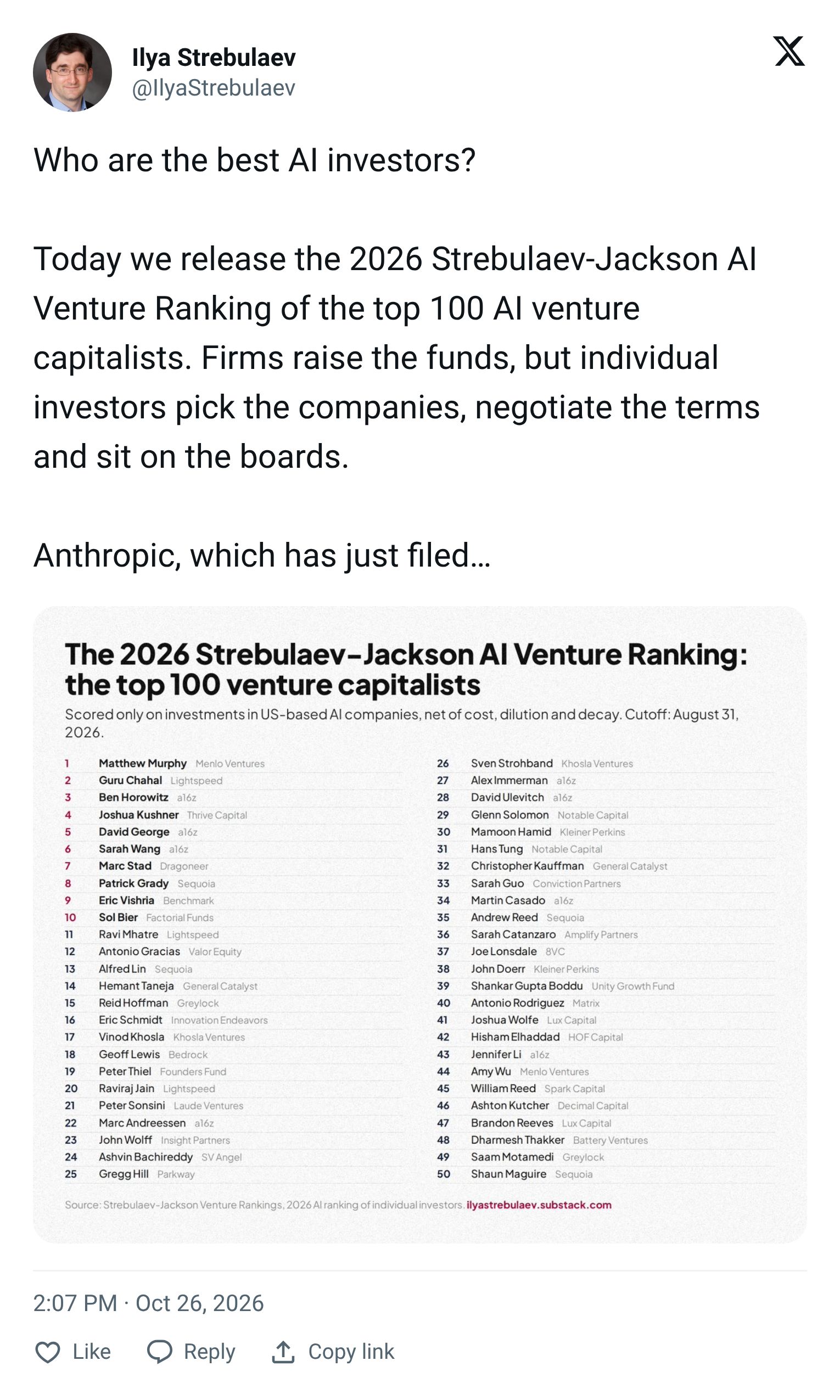
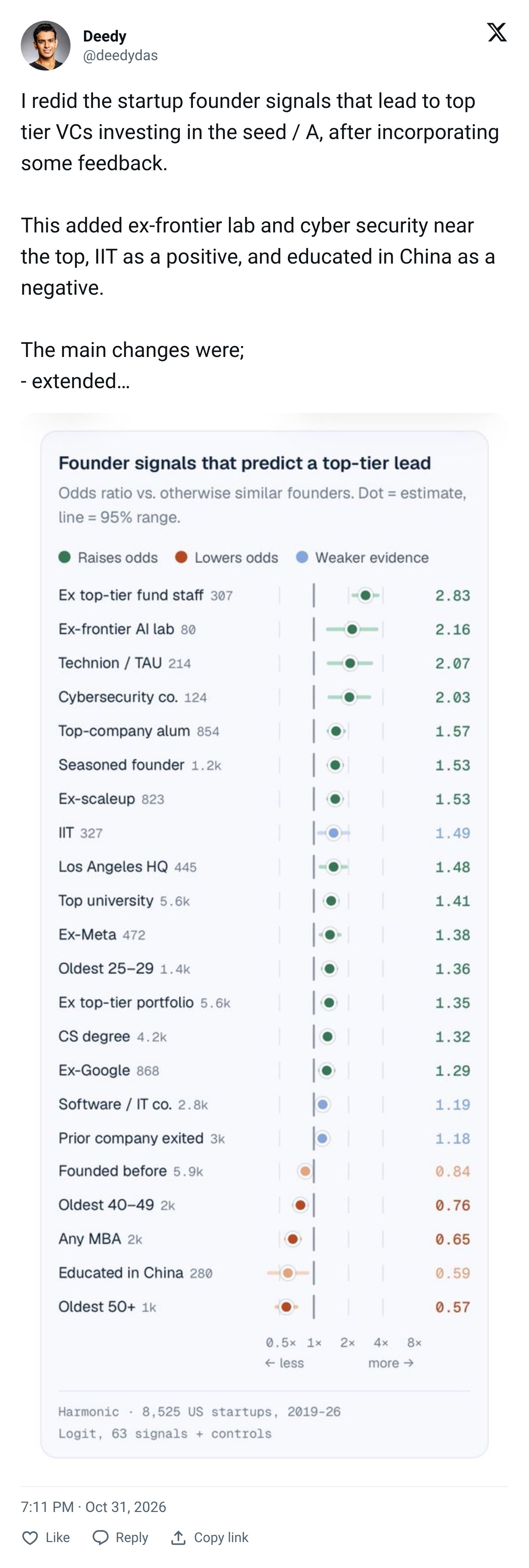
| We run ~200 events a year with a small team. We prioritize hosting our own events over logos on others, favor small 8-12 person dinners with a structured tactical discussion, and do one big invite-only event a year. Co-hosting with split costs is always on the table. Budget is set annually, so bring us your full 2027 calendar rather than a one-off ask in October. We also only launch things we can commit to for several years. We’re happy to support the communities you’re building, so think of us as a partner. | The gap nobody’s filling | Platform leaders don’t get enough structured time with peers. There’s real interest in continuing this dinner series, with BD best practices as the first topic. If you run platform at an early-stage fund and want in, reach out. | Have a great week, | Shai Goldman | | Interesting list of the best individual AI investors by Ilya Strebulaev, who is a Finance Professor at Stanford and Founder & Director, Venture Capital Initiative at Stanford GSB | | Deed Das who is a Partner at Menlo Ventures posted a list of top Founder signals tied to raising from a top tier investors. Third on the list was Founders who attended universities in Israel, specifically Technion and Tel Aviv University, most would assume Stanford or MIT would be higher ranking. | | | | Events you might see us at - subscribe here - all focused on Founders, VCs & Finance leaders: | Nov 5 - SF - Brex rave - 7pm to 11pm - Apply Here | Nov 17 - SF - Michelin star dinner with Series A backed founders - contact Chris DN for details | Nov - NYC - Torrisi buyout - for VC backed Founders & GPs - at capacity | | Sign up here for Brex and receive $1,250 towards Brex Travel or $750 cash | Brex is the intelligent finance platform built for speed and control. Combining corporate cards, banking, treasury, expense management, bill pay, travel, and accounting, Brex helps companies spend smarter and move faster in 120 countries. By integrating AI across every workflow, Brex enables founders and finance teams to eliminate manual work, do more with less, and accelerate impact. More than 35,000 companies from startups to enterprises run on Brex, including Anthropic, OpenAI, Cursor, Granola, ServiceTitan, Robinhood, DoorDash, etc. | | |
|